
(photos and text by Angelo Bottazzi)
Pursued by Tropical Storm Gabrielle, which was lashing the Portuguese coast, we began the long journey of more than eight hundred kilometers that would take us from Beja to Albacete, in the region of La Mancha, where we intended to attend the final week of the TLP Comao Flying Course 3-2025. Halfway there, we stopped for a quick lunch at a country inn, a fatal mistake, because all four of us contracted food poisoning from spoiled food that would remain with us for the first two days of the week.
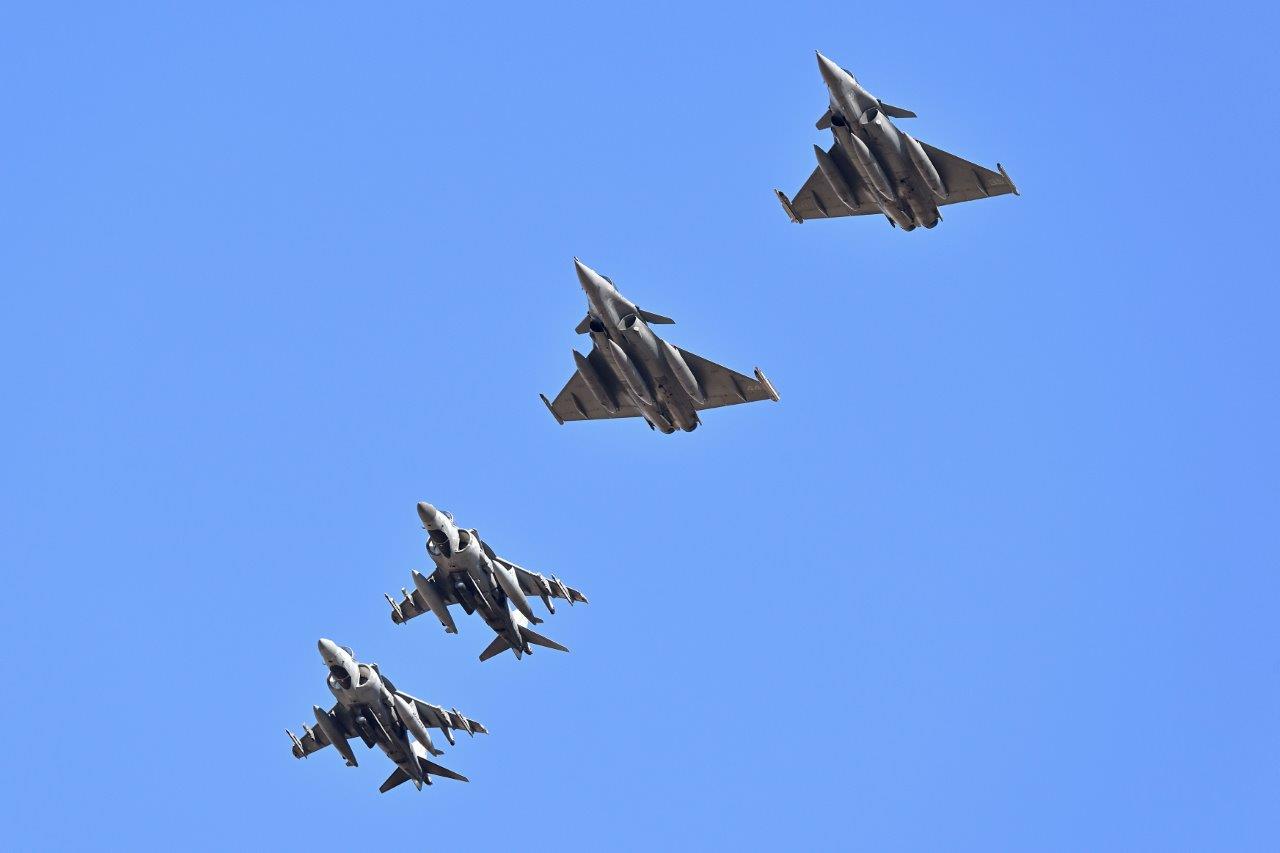
When we reach Albacete, it’s not raining, but the dark clouds are an unbroken blanket, hovering low above us! It will be like this for the next two days: oppressive skies with omnipresent clouds at low altitudes, icy winds, and reports of catastrophic flooding in other parts of Spain.
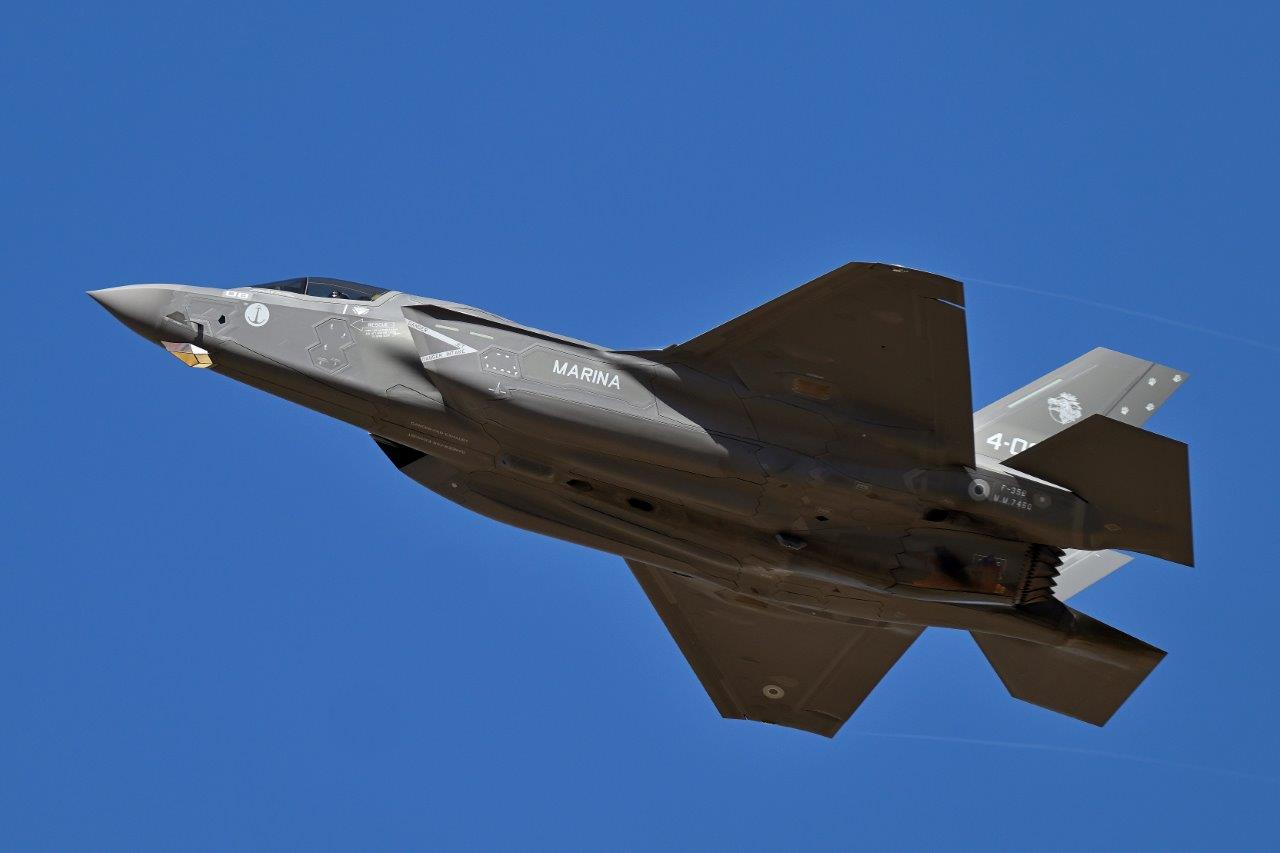
In the meantime, we have the chance to watch Monday’s short morning mission, while the afternoon mission of the course has been canceled. We’re off to a great start! On Tuesday, they fly both morning and afternoon, but the music is always the same: a suffocating ceiling with a few brief glimpses of sunshine, but never in the sky above the base. By evening, our morale has sunk, and the forecast calls for cloudy skies all week, due to the Mediterranean vortex that has formed precisely in this area of the Iberian Peninsula.
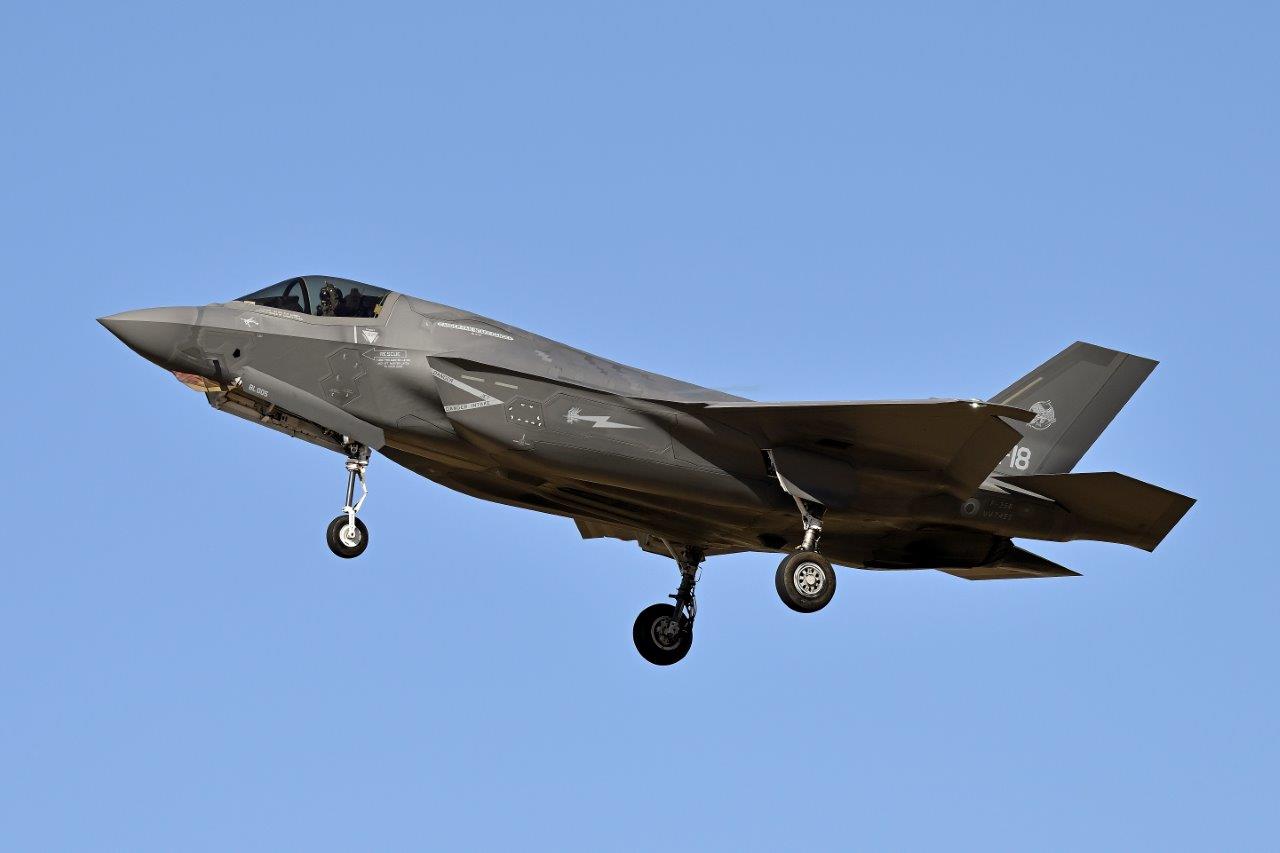
Let’s take a step back. At the beginning of the year, I had promised myself I would photograph our Navy’s aircraft properly. I had followed them wherever I heard of their presence, first in Jesolo and then in Ghedi, but the result had left a bitter taste in my mouth. I would have liked to have done more and, above all, better.

When I learned of their massive turnout at the TLP in early September, which I’d already planned to attend, thanks in part to its coincidence with the Tiger Meet, I’d hoped my dream would come true. But now that I have them within range of my target, just as I’d hoped, the weather is relentless. Is it the curse of the Wolves? No, it’s the spotter’s revenge. The next morning there’s not a cloud in the sky, and it won’t be that way until the end of the week. Now I really feel like Little Red Riding Hood’s hunter!

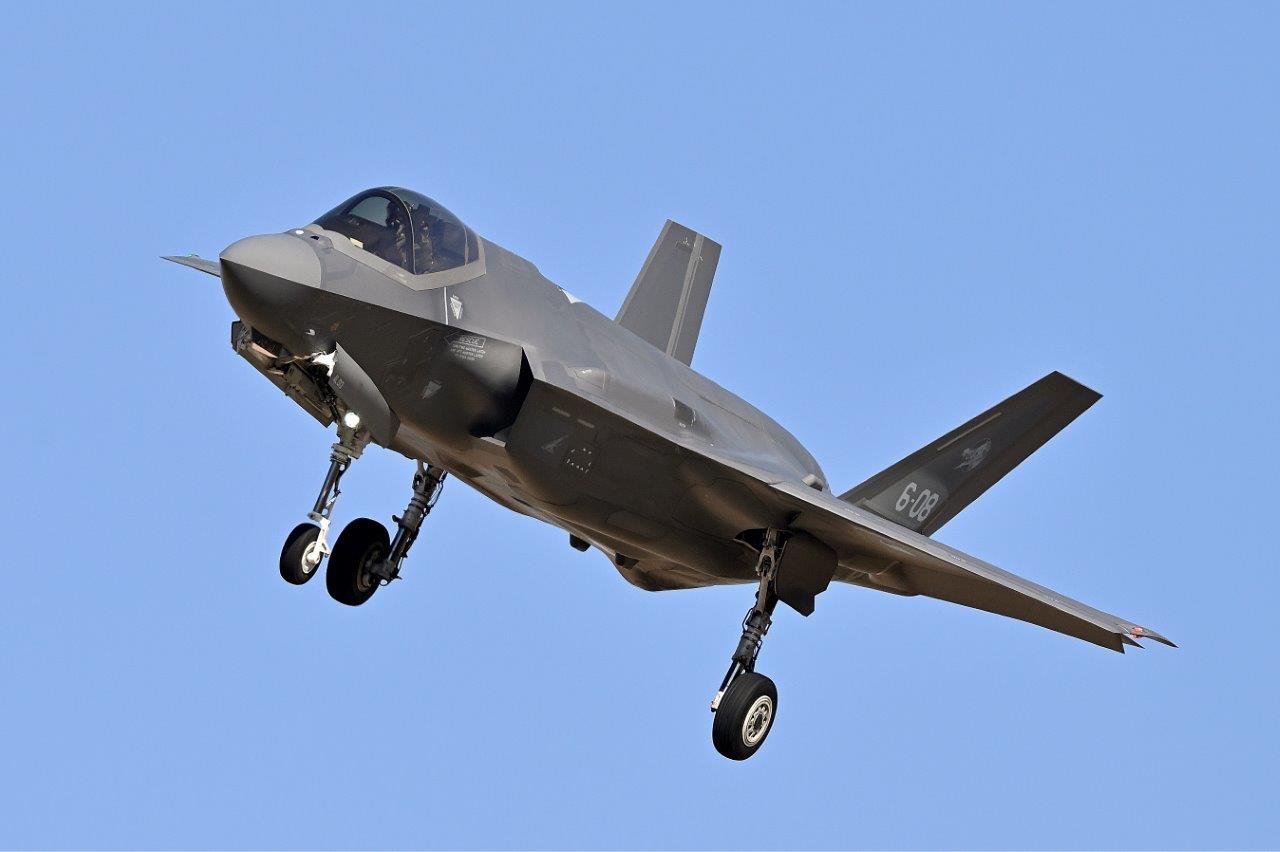
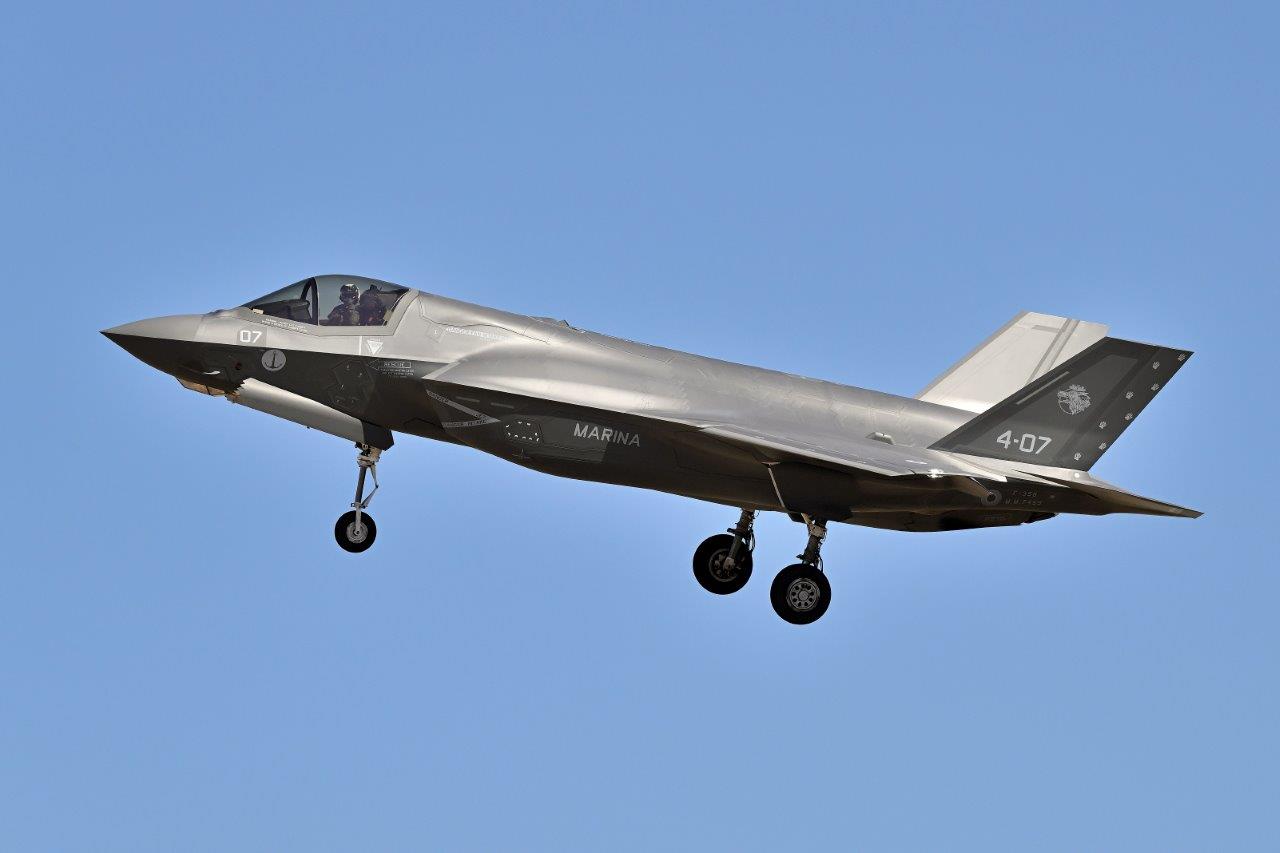
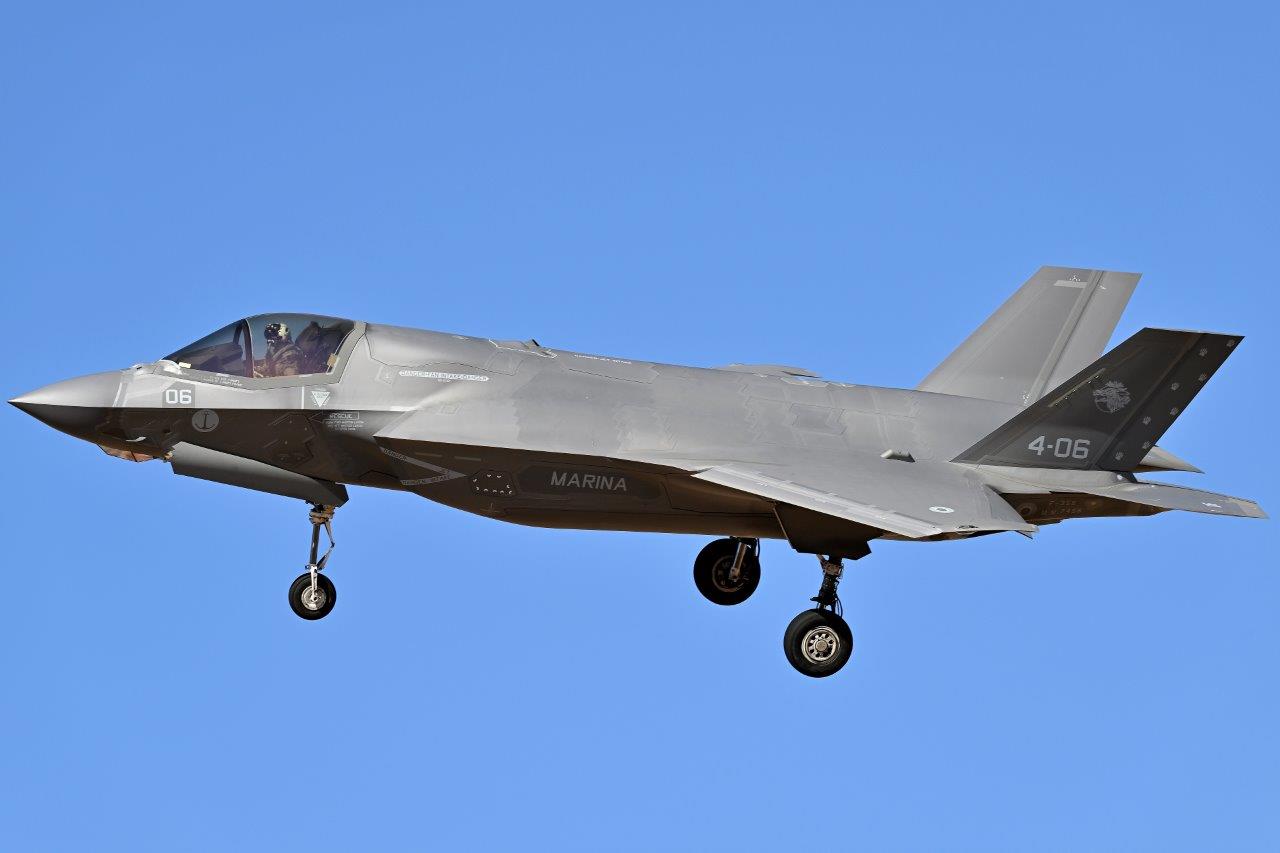
This TLP course is a very “naval” course, in fact there are: five F-35B
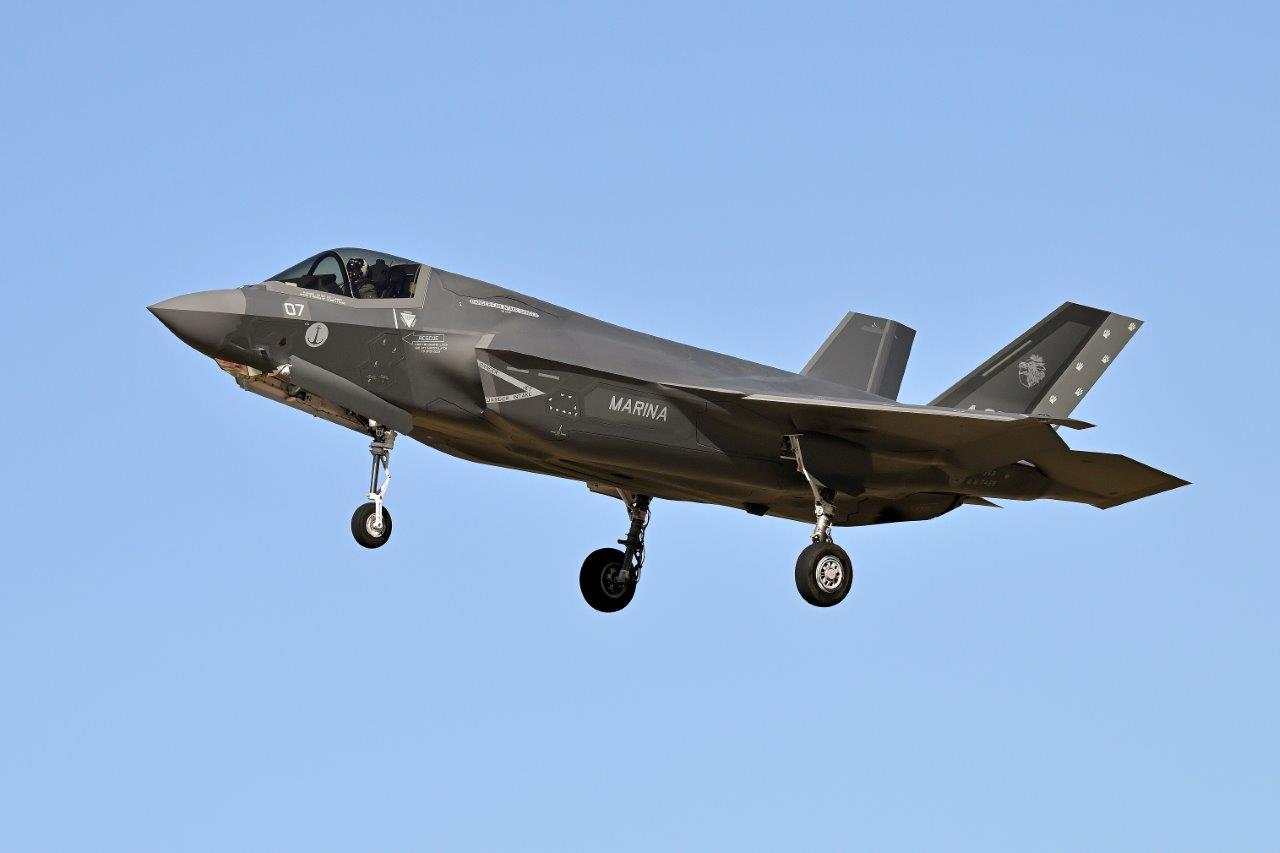
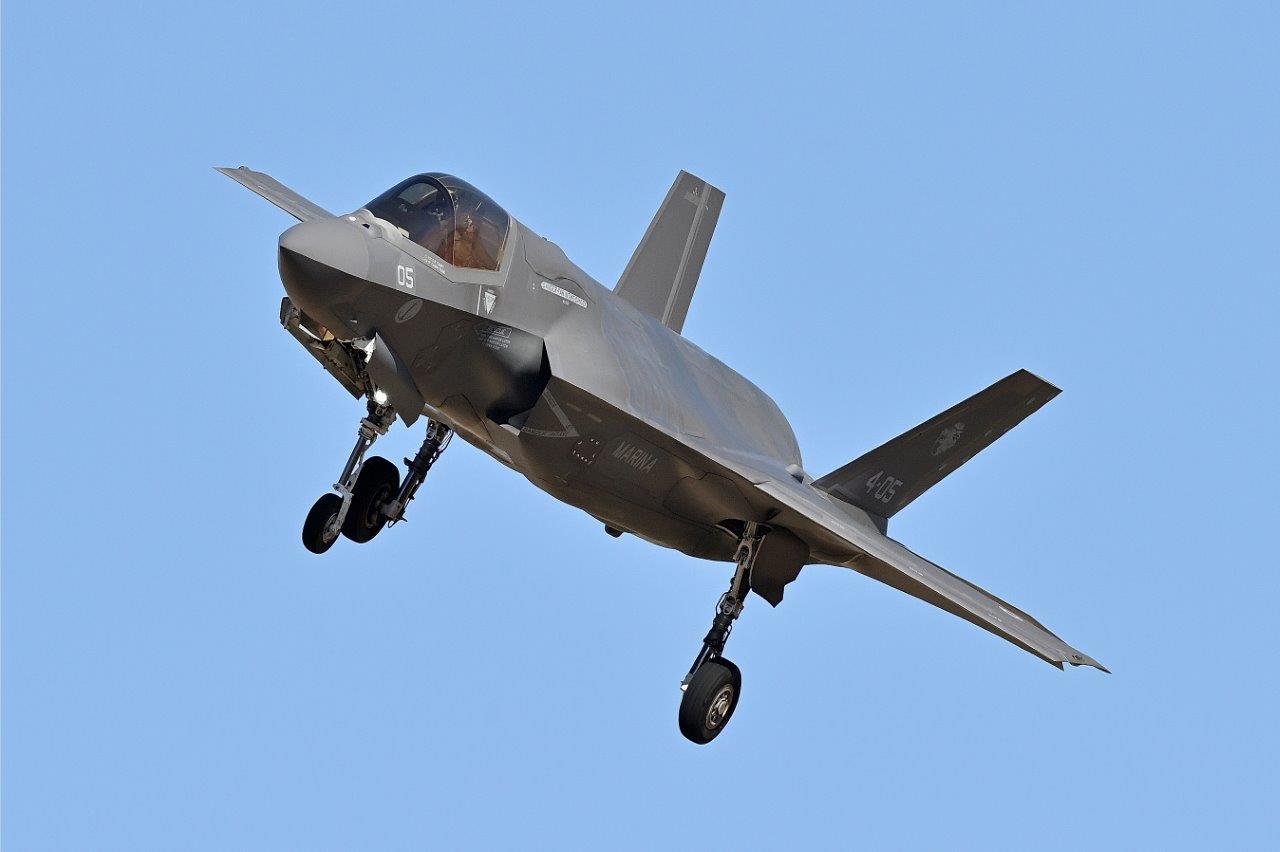
and five AV-8B Harrier II+ of the Navy
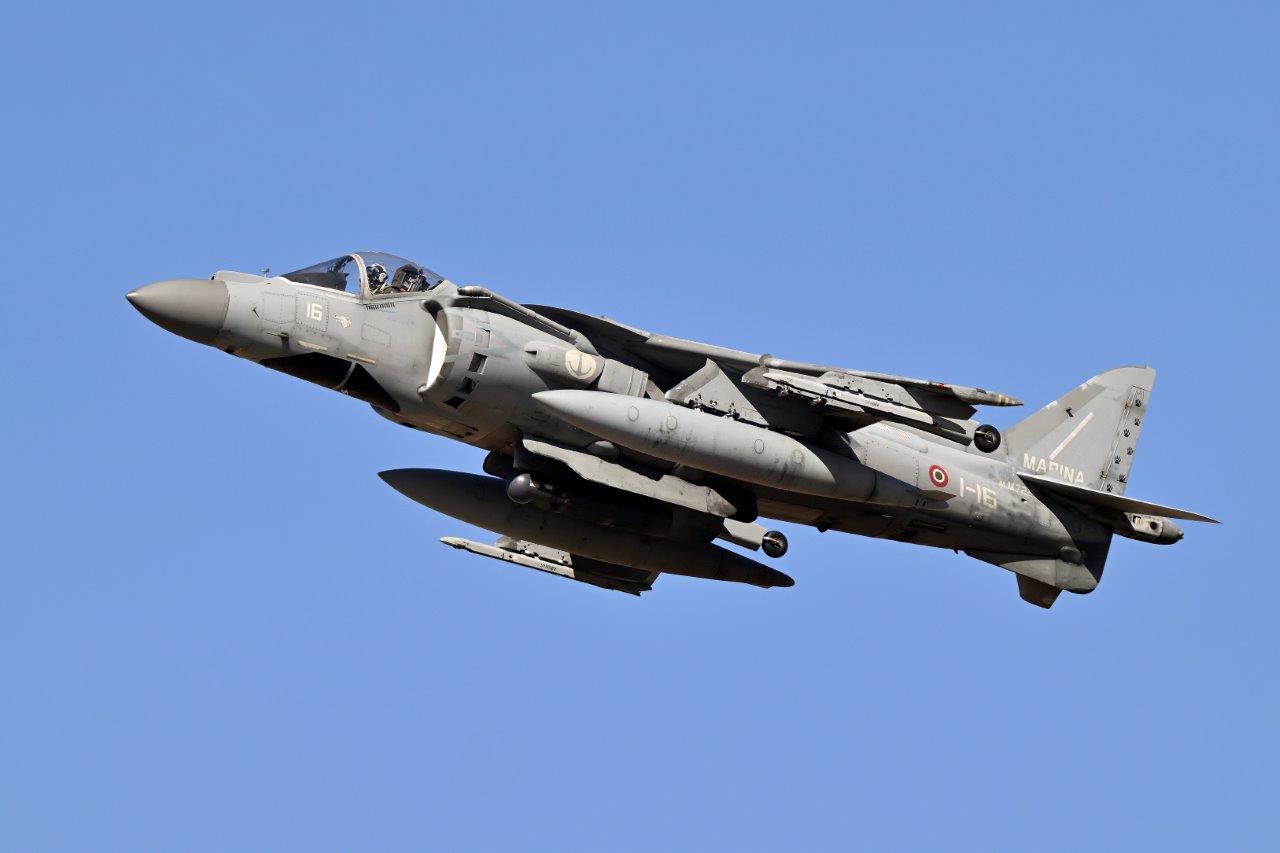
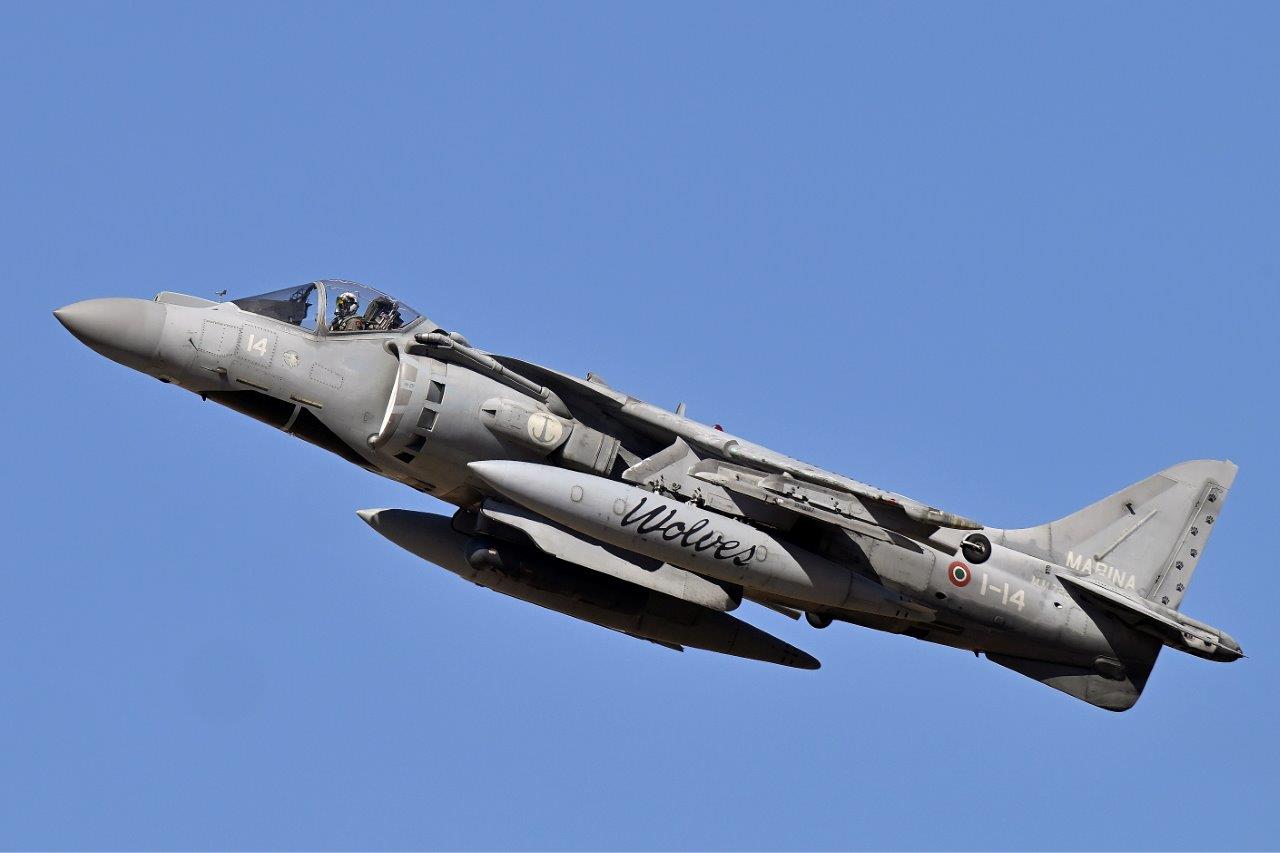
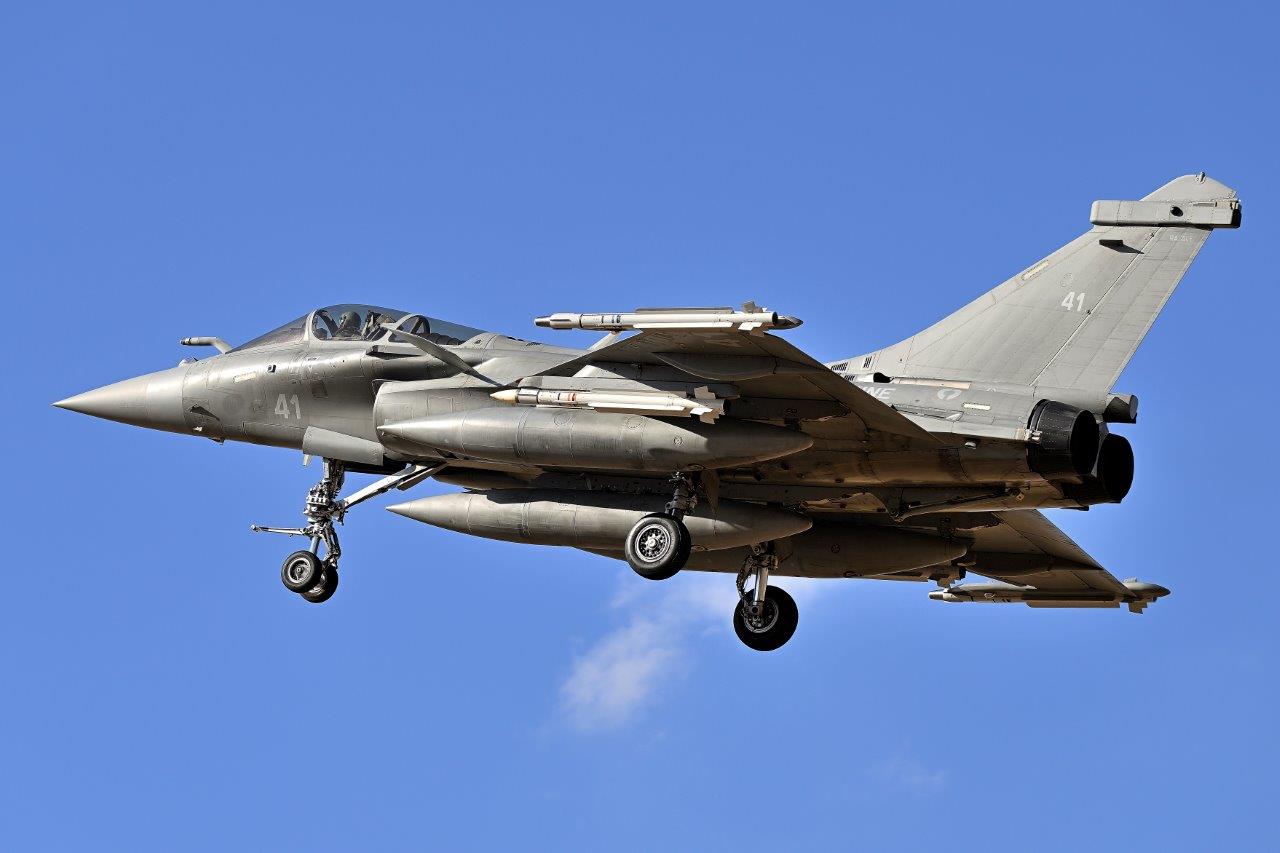
Six Rafale M aircraft from Flotille 12F of the French Naval Air Force based in Landivisiau were also scheduled to participate; two Spanish Navy Matadors were also expected, but we didn’t see them; perhaps they were operating directly from the aircraft carrier.
The naval vocation of this TLP was confirmed by the presence of the P-72A MPA, the Italian Air Force’s multi-role maritime patrol aircraft, which participated in all of the afternoon’s missions.

New, compared to our previous experiences here, is the presence of the Boeing E-3F Sentry of the Armee de l’Air stationed at BA 702 in Avord.

Other participating units were: two F35As from the 6th Wing 154th Group of Ghedi, and two F35Bs from the 32nd Wing 101st Group based in Amendola,
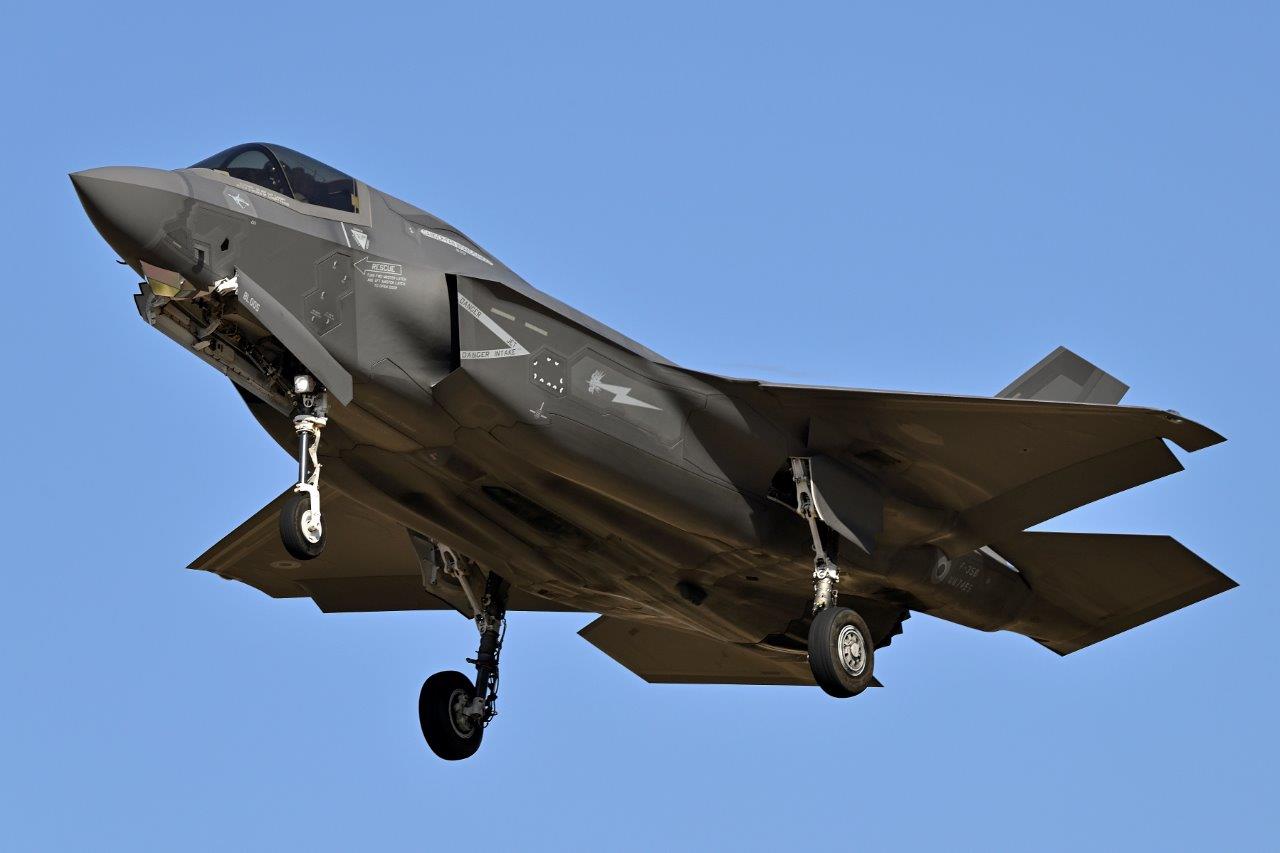
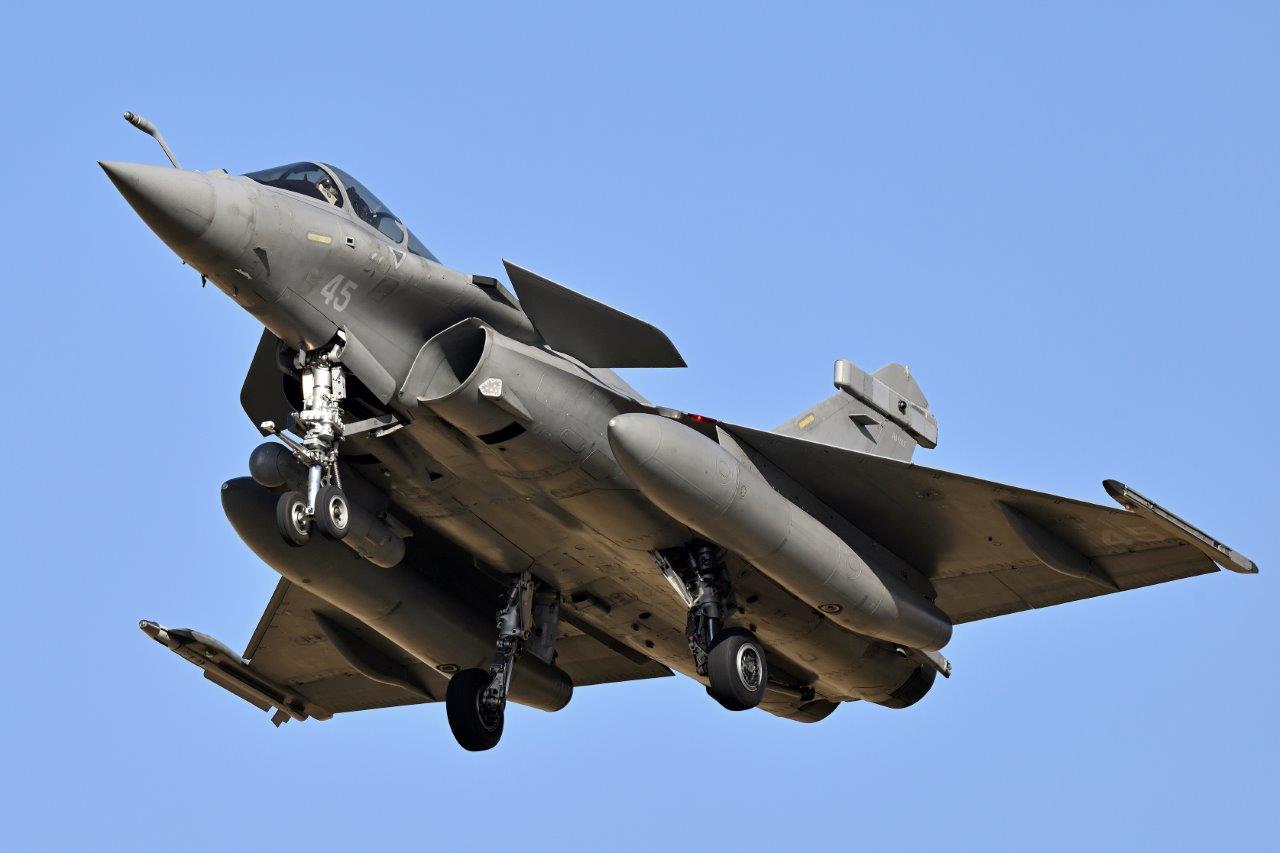
the French were also present with two Rafale Cs of the EC 2/30 Normandie Niemen based at BA118 of Mont de Marsan,
Four F16Cs from the 341st Air Regiment of Polemikí Aeroporía (Polemikí Aeroport) departed from Nea Anghialos Air Base. The hosts, the Ejército del Aire y del Espacio (Air and Space Army), also provided two Eurofighter C16 Typhoons from the 11th Wing based in Moron de la Frontera,
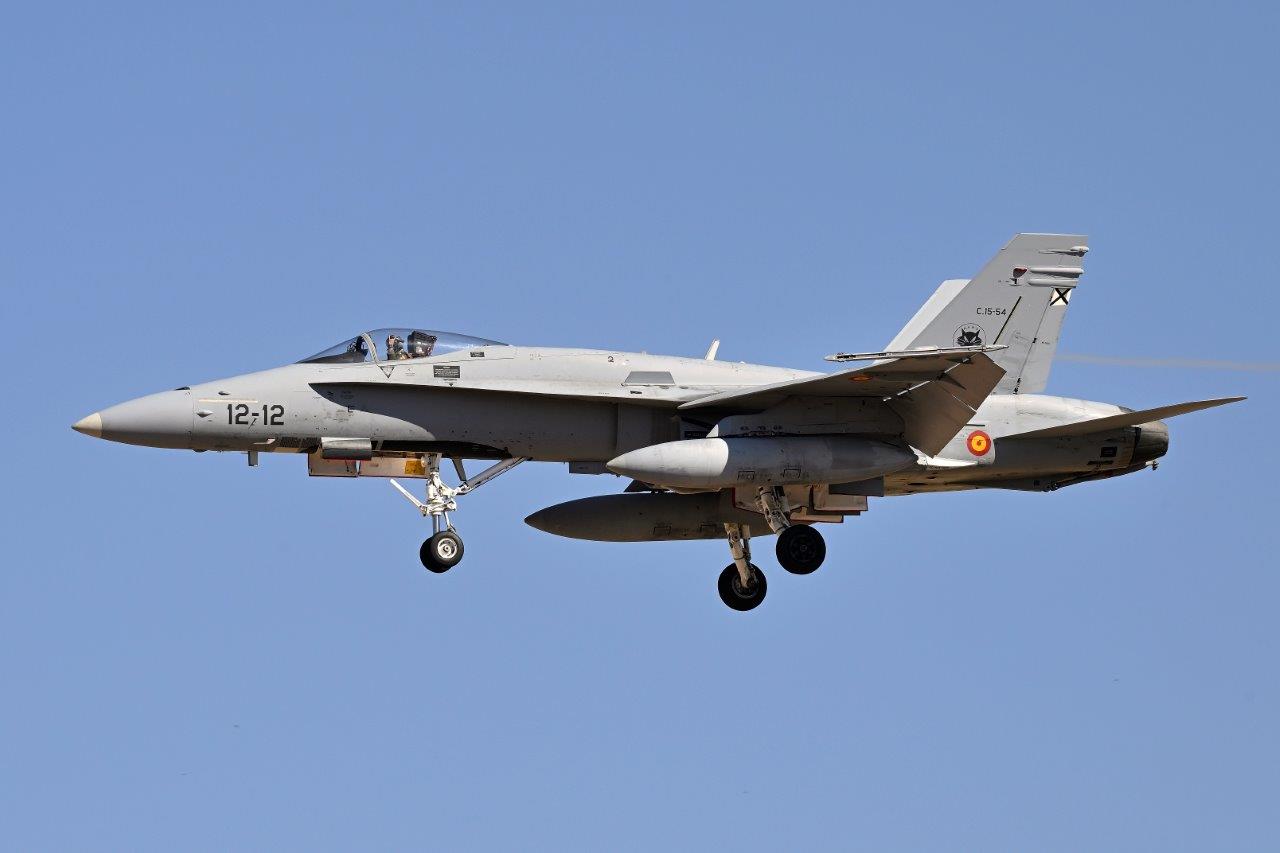
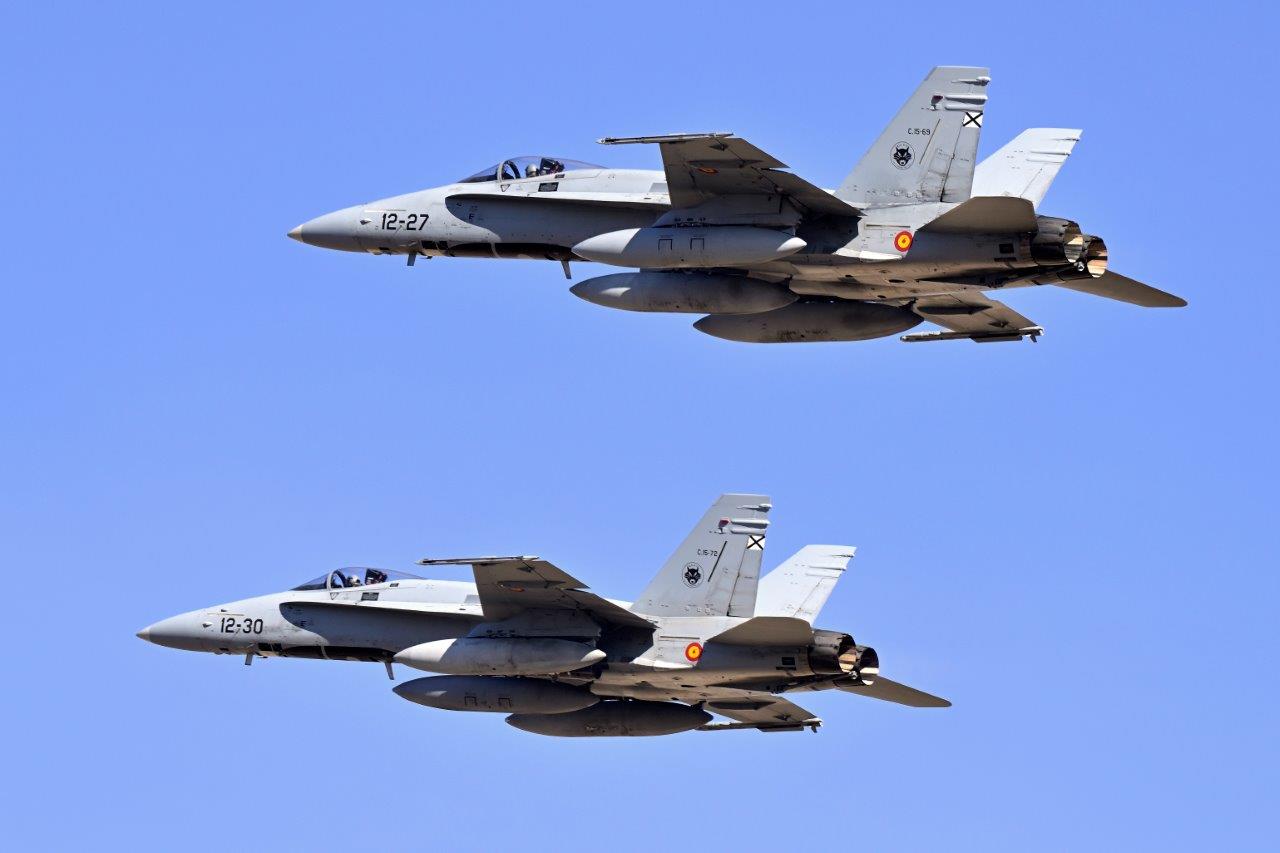
eight C15 Hornets from the 15th Wing based in Zaragoza.
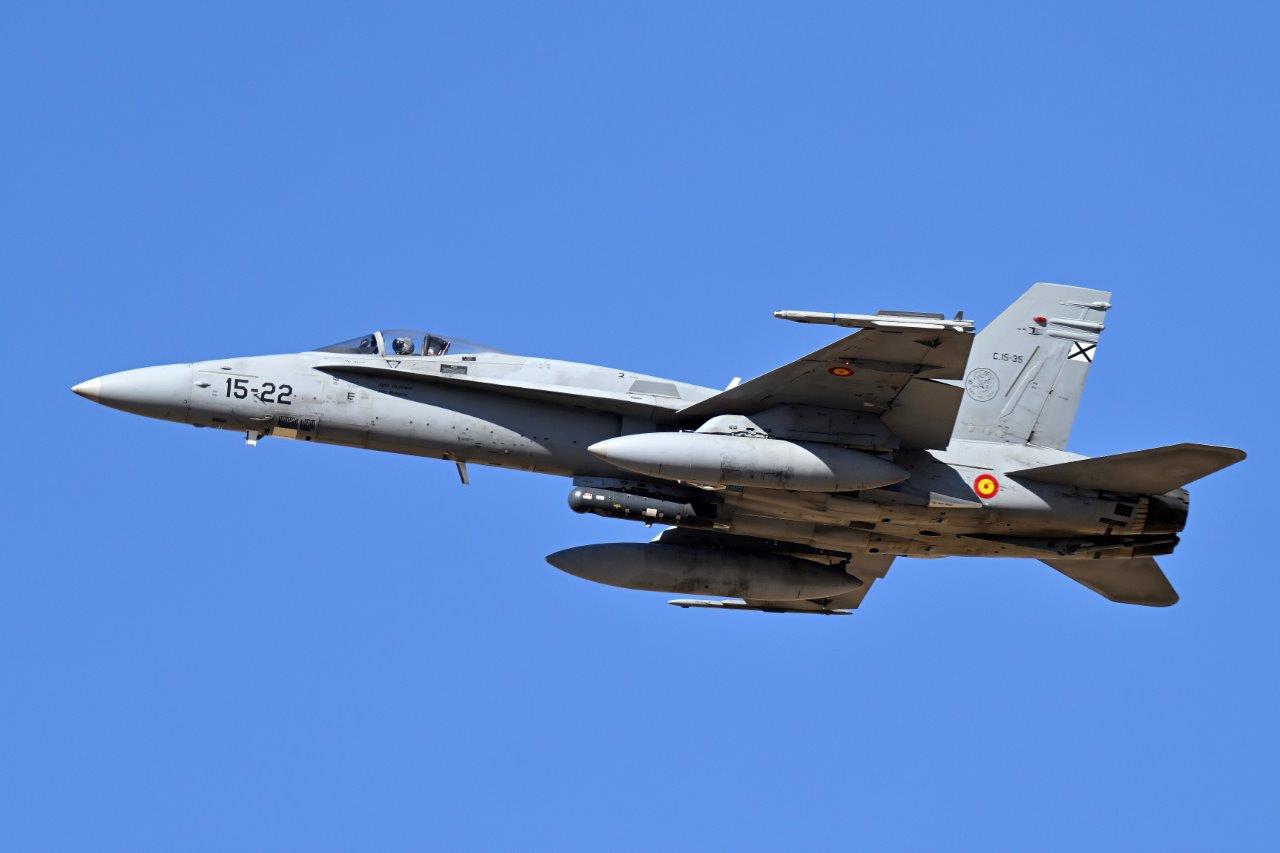
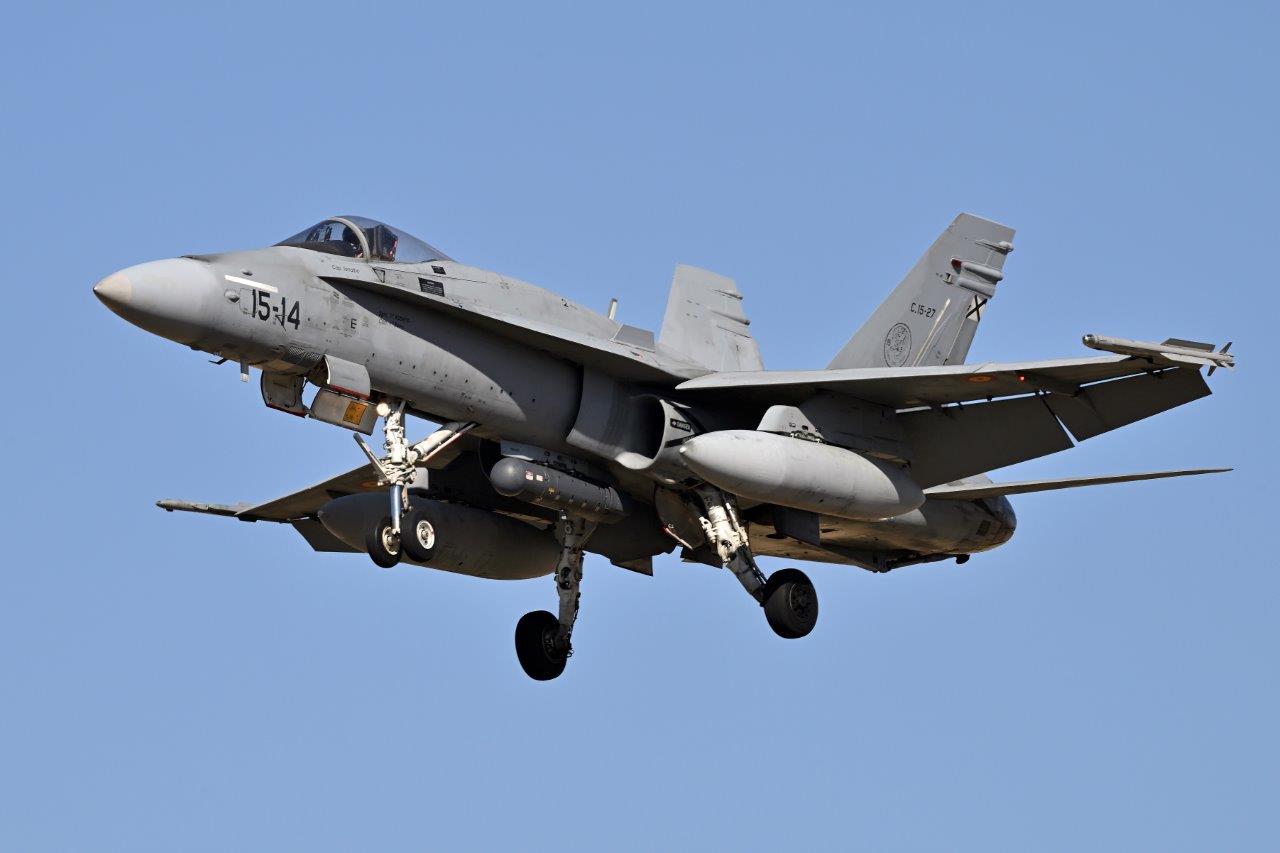
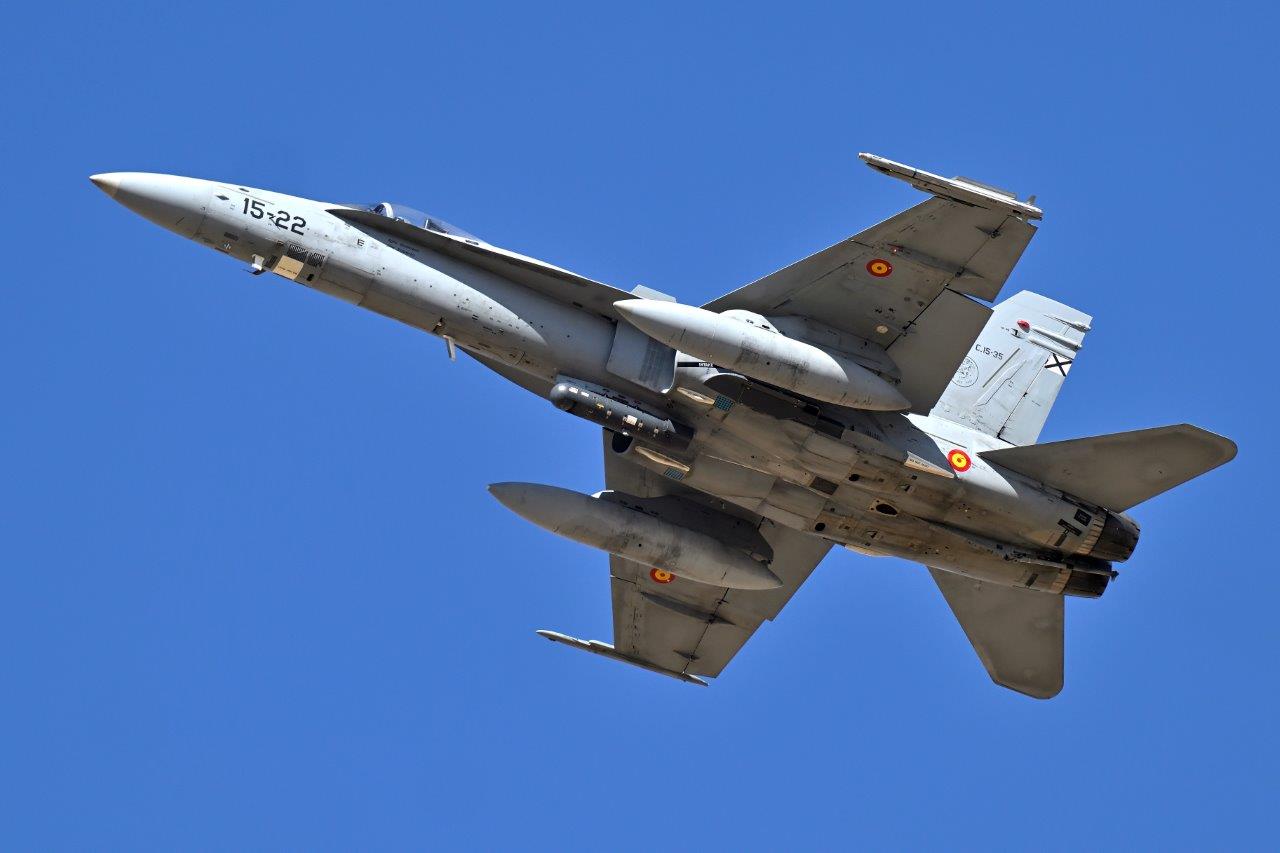
and Wing 12 of Gando in Gran Canaria.
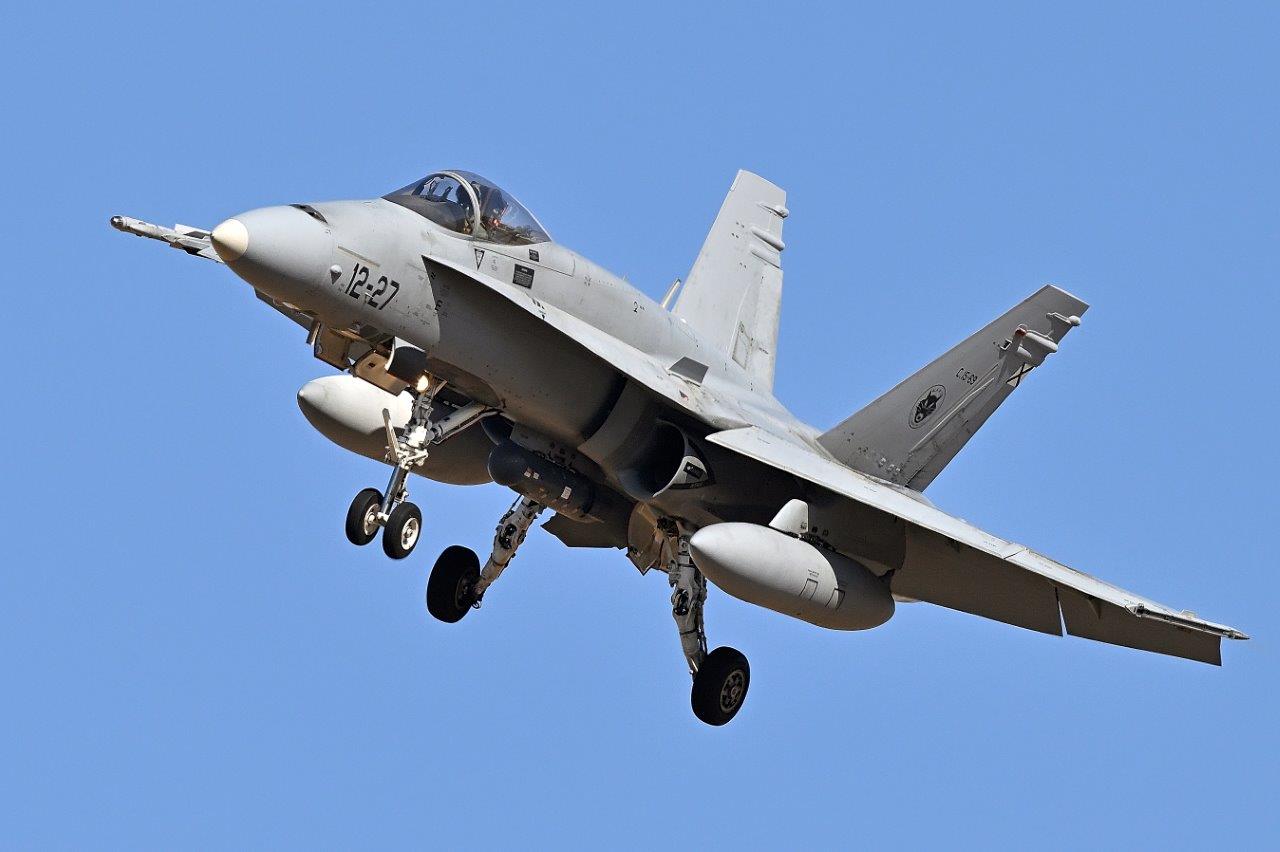
It is therefore important to underline the Italian nature of this TLP and the fact that almost a third of the participating aircraft were fifth-generation fighters. This is not the first time at the TLP, but never in such a significant number, and seven out of nine were in the B version.

In addition to the aircraft participating in the TLP course, the Los Llanos base also includes the 14th Wing of the Air Force, equipped with Eurofighter C16 Typhoon fighter aircraft, as well as the Albacete Air Workshop (MAESAL), dedicated to the high-level maintenance of the Fire Brigade’s EF-18 Hornet, Eurofighter and Canadair CL-215 aircraft.
The TLP was established on the basis of a Memorandum of Understanding between 11 NATO nations. The TLP’s mission is to increase the effectiveness of allied air forces through the development of skills in leadership, mission planning, briefing, tactical air operations, and debriefing. Its primary tasks are to prepare NATO flight leaders to become Mission Commanders capable of directing coalition air strike packages as well as instructing both flying and non-flying personnel on all aspects of tactical composite air operations.
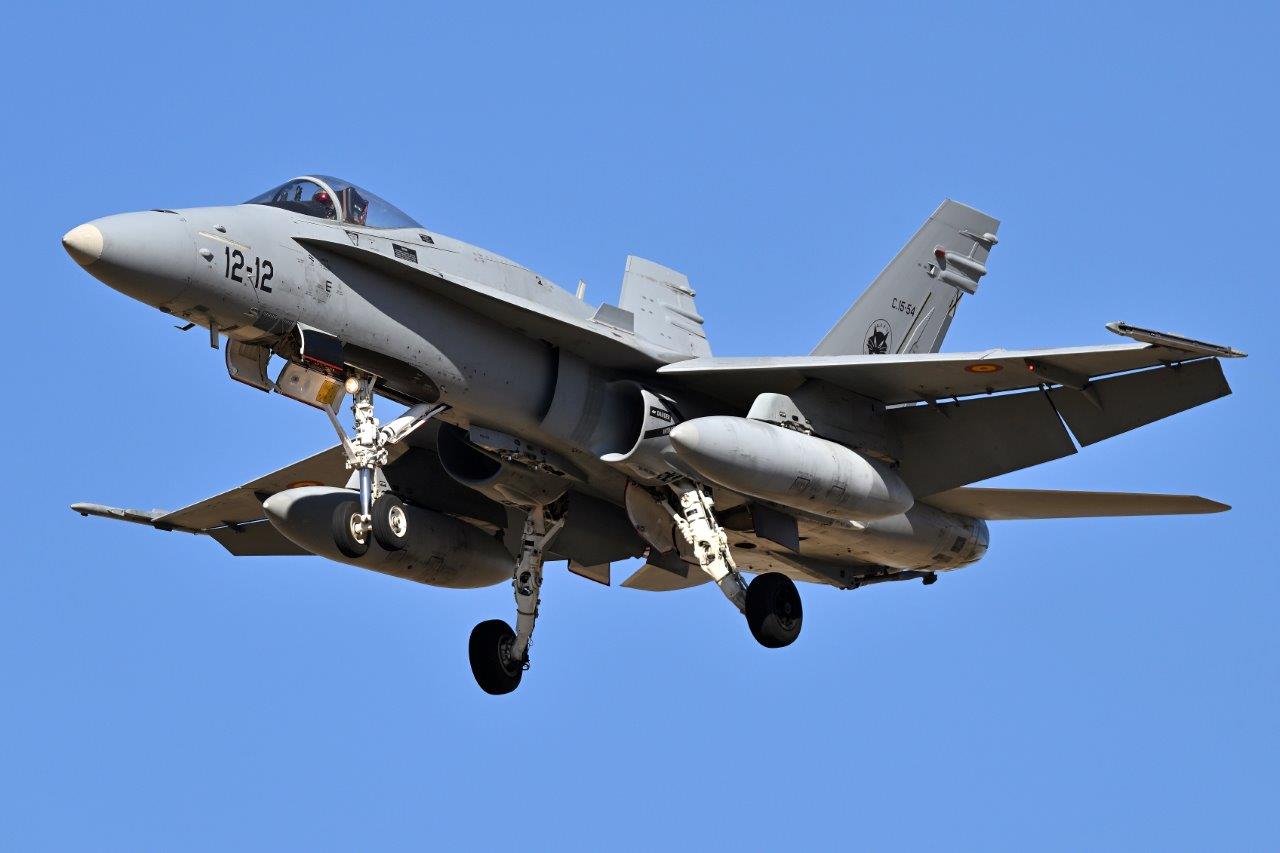
The TLP achieves these goals through flying and academic courses for allied personnel. The TLP COMAO Flying Course aims to improve the tactical and flying leadership skills of front-line Mission Commanders, promoting tactical interoperability among NATO air forces through exposure to other nations’ tactics and capabilities.
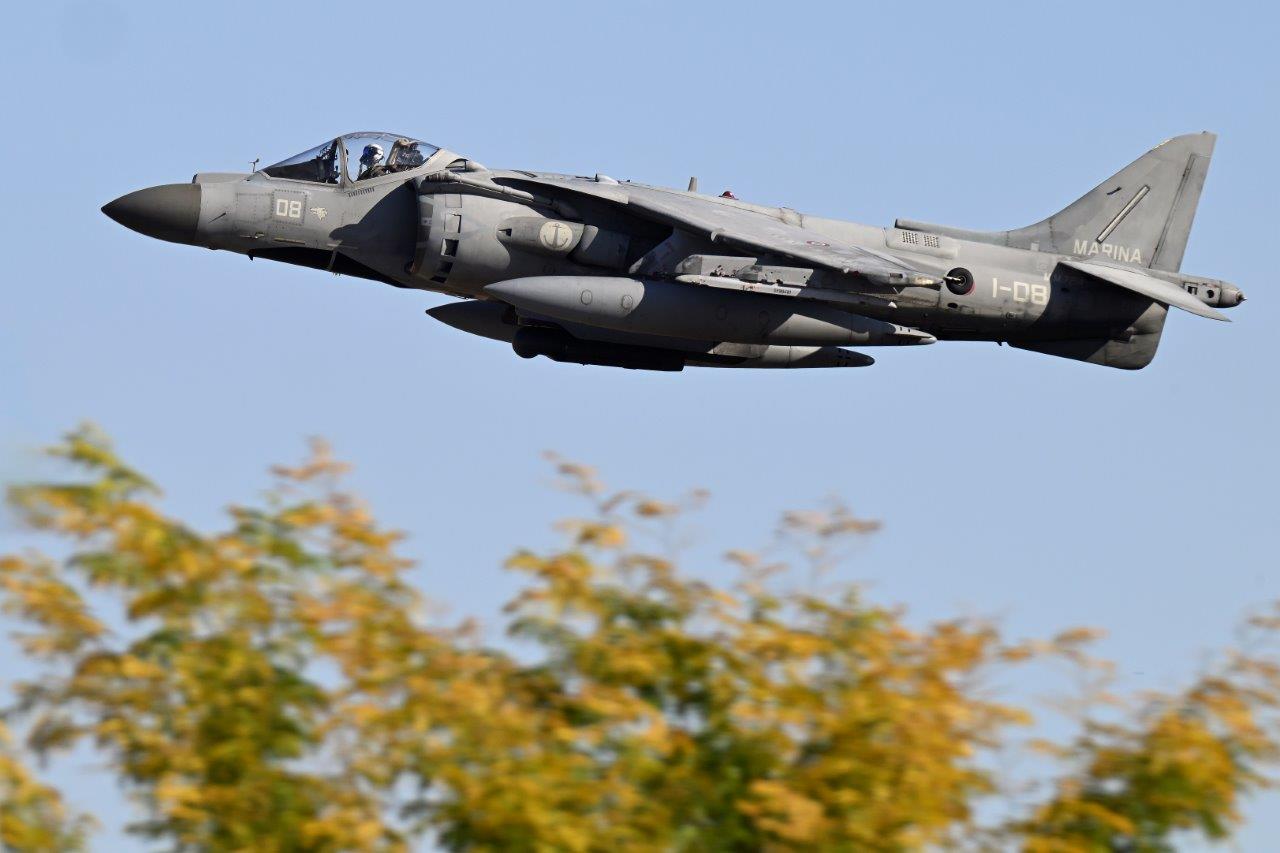
The course also provides an environment for exchanging information on weapons, tactics, and capabilities, fostering the development of multinational tactical employment concepts in Composite Air Operations (COMAO). The course adopts a progressive approach with 12 total missions.
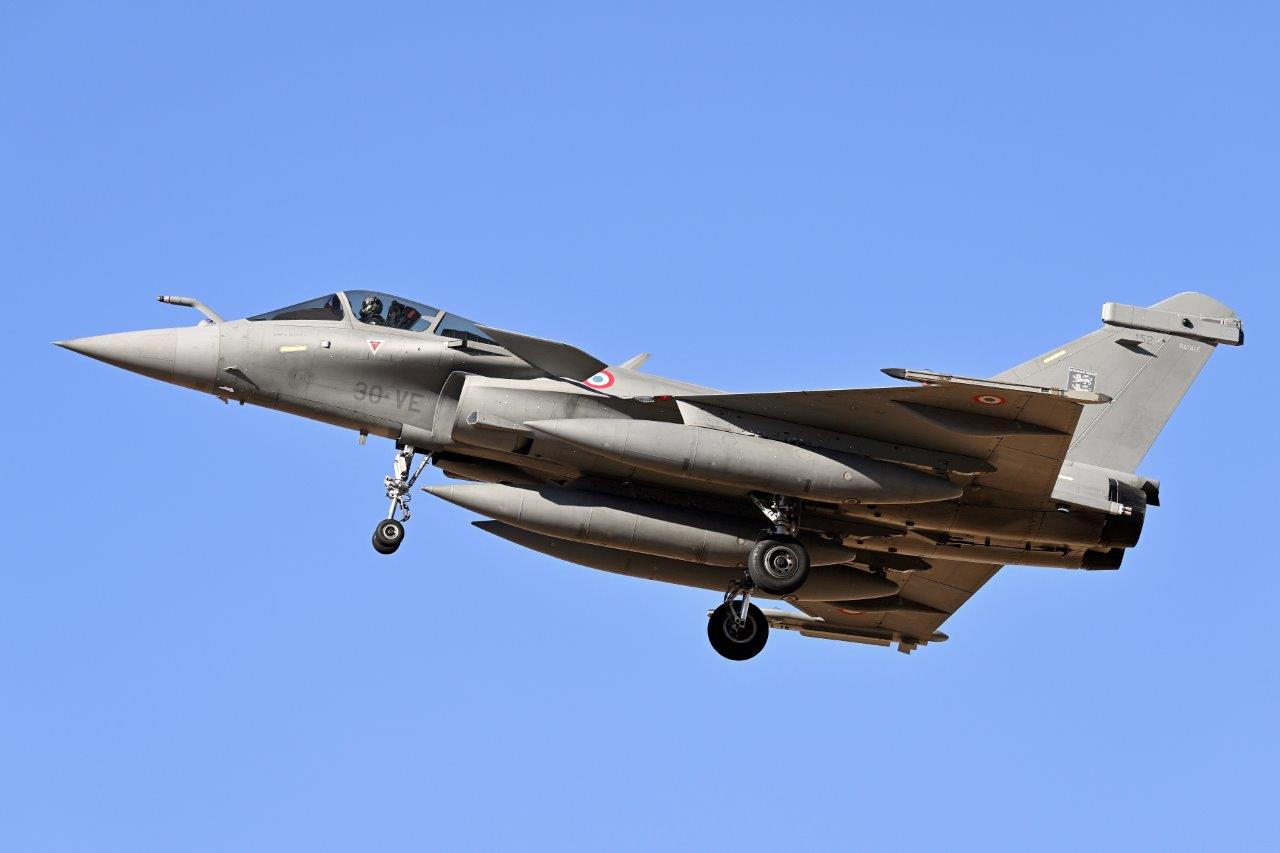
Of these, three are synthetic missions, meaning they are planned and flown using simulators. They serve to familiarize the COMAO planning process, develop leadership, and improve teamwork. Nine missions are actually flown and aim to develop tactical leadership skills for planning, briefing, flying, and debriefing integrated multinational formations.
Missions are conducted from Albacete Air Base, equipped with a 2,700-meter runway oriented 09/27, using land and sea training areas. Long-range missions may include air-to-air refueling, while a wide range of land targets is available. The course lasts approximately three weeks. The first seven working days include academic lectures and three synthetic missions, followed by two weeks of nine consecutive missions.
The aircraft must be ready for flight by the second Monday, while the crews return to their respective bases early on the final Friday. The flight activity usually consists of a morning test mission involving a maximum of ten aircraft—this time, the Navy’s Rafales did not miss a single one—and an afternoon wave involving all crews, departing between 3:00 PM and 3:30 PM and returning around 5:30 PM.

Los Llanos Air Base, a very rare occurrence, is oriented in such a way as to offer considerable observation opportunities from the outside. Both Bases 09 and 27 have roads running close by and convenient parking areas without traffic problems. The atmosphere is very relaxed, few people witness the flight operations, and security is very lenient. The police pass by but pay you no attention; you sit back, calmly, with your lens and radio, and concentrate.
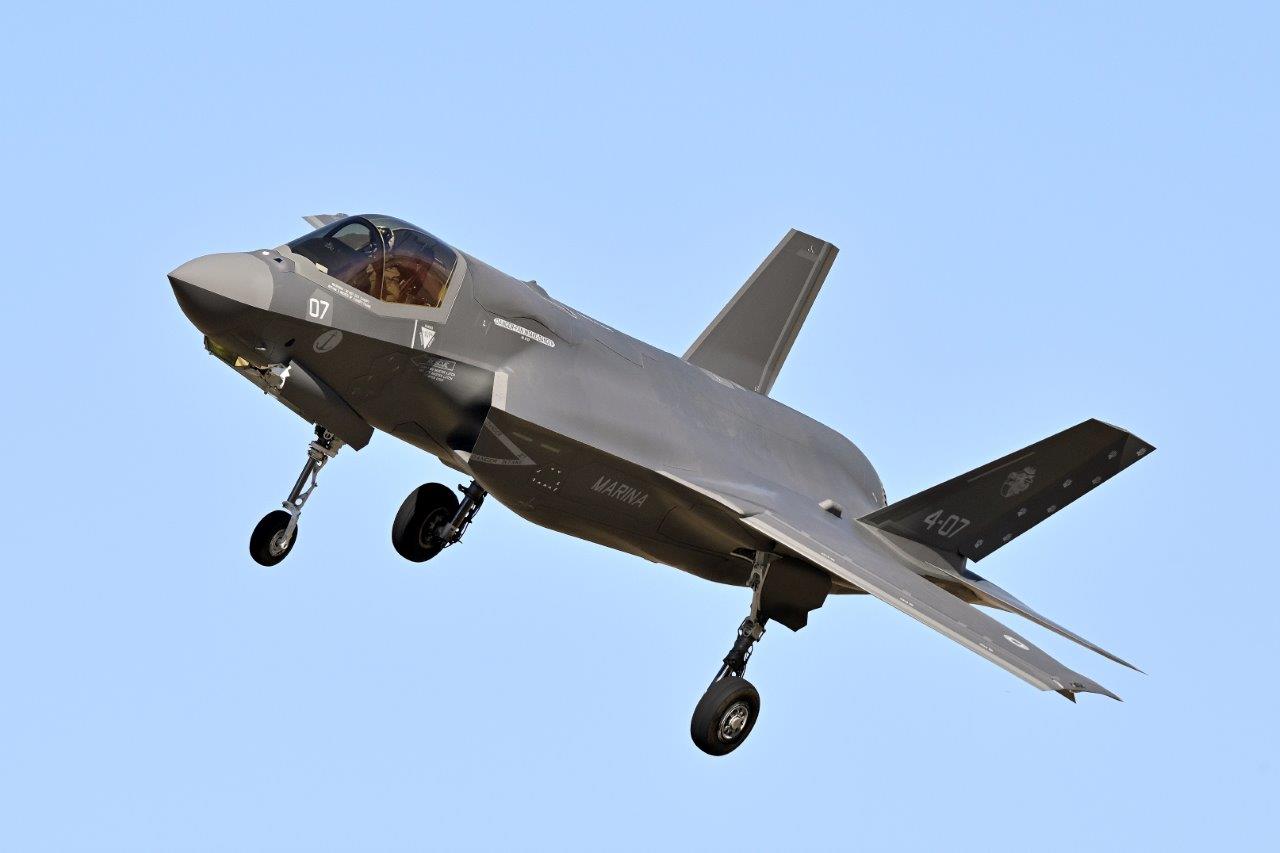
There are no natural obstacles or anything else that limits photographic activity, furthermore the proximity to the planes, both during take-off and especially during landing, is so reduced that one can try some rather daring shots that would be very difficult in other contexts.
Thanks to the sudden, unexpected, and blessed change in weather, we were able to document four missions in three days: two in the morning, the two complete afternoon waves, and all the Friday morning departures. The wind blew moderately, an unusual situation for Albacete, which is located on a plateau at about 700 meters above sea level, but it always came from the same direction, making the runway in use predictable, always the dos siete.
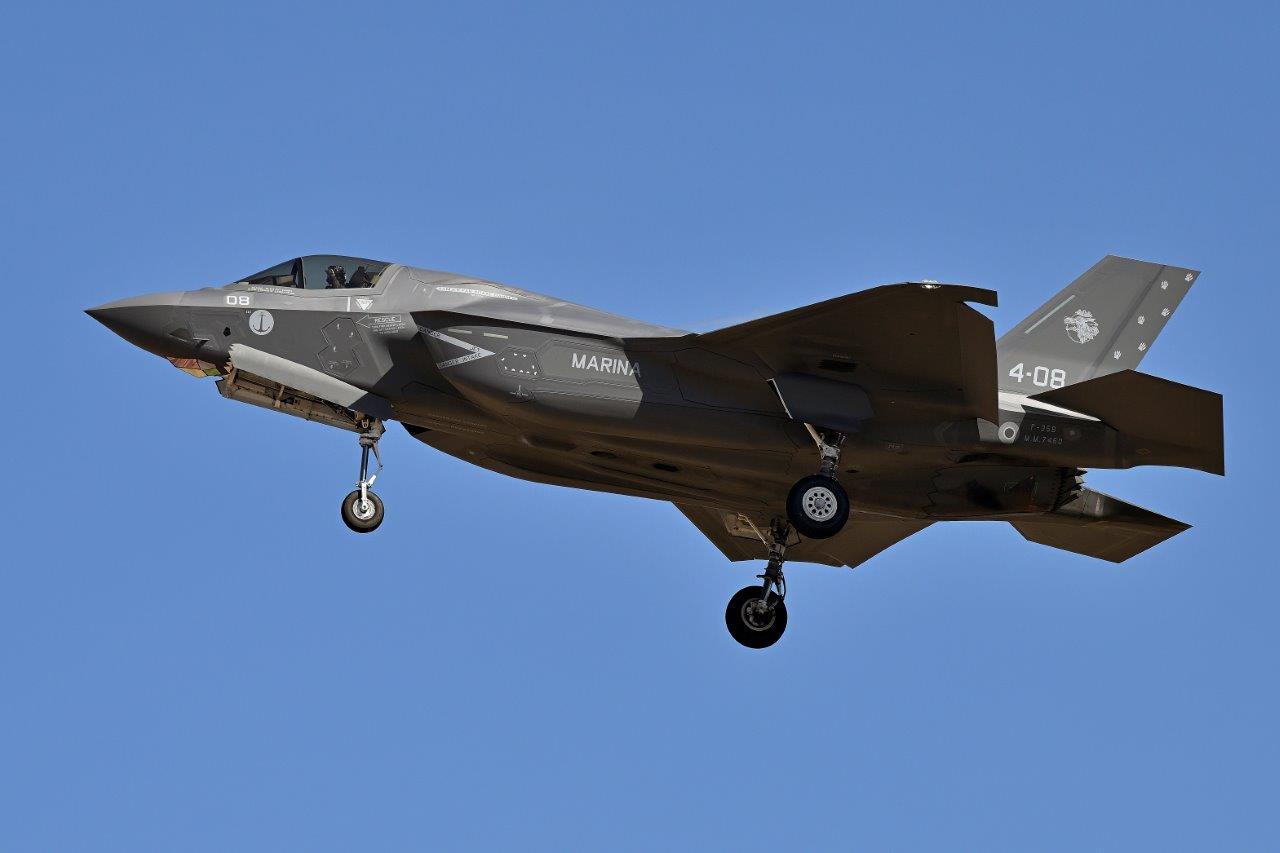
The crowd was a little larger than usual, especially the first few days. Almost everyone came from the Tiger, English, German and Dutch, but we are talking about a maximum of just under thirty people at the peak time of the afternoon landing, the best time due to the very favorable light that highlights the details of the planes even on the ventral side.

The pilots were very cooperative, especially the Wolves (callsigns Roma and Rambo), who, realizing there was no contest this time, performed some very photogenic turning landings with a salute from the pilot. The Harriers performed flat takeoffs to be filmed between the airport’s external lighting poles, as well as spectacular rolling landings. The AMI F35Bs and As also allowed us to take some good shots with salutes and turns before lining up for final.
The French Rafales, call sign Paris needless to say, flew en masse on all missions,
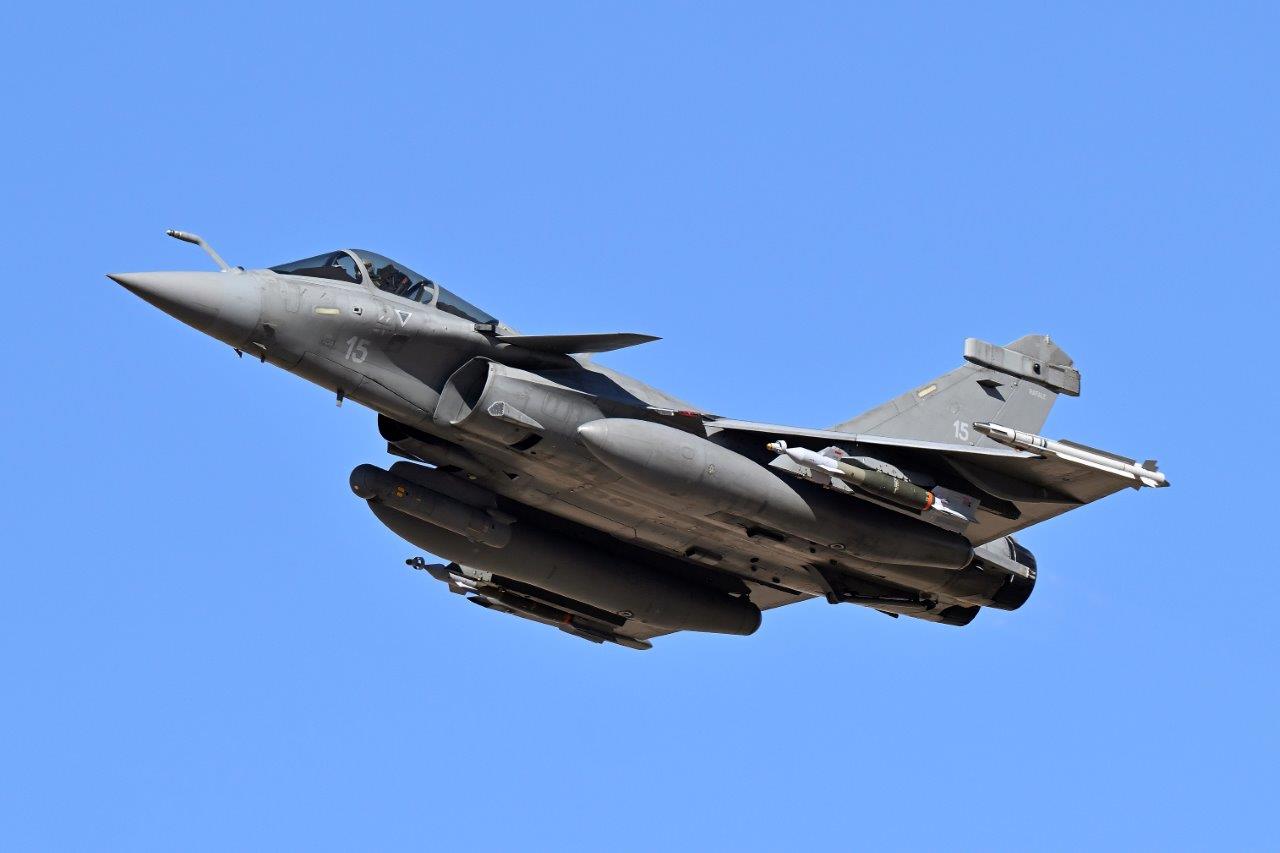
with different armaments and configurations; the Greeks, with F16s tested by use and with unlikely colors,
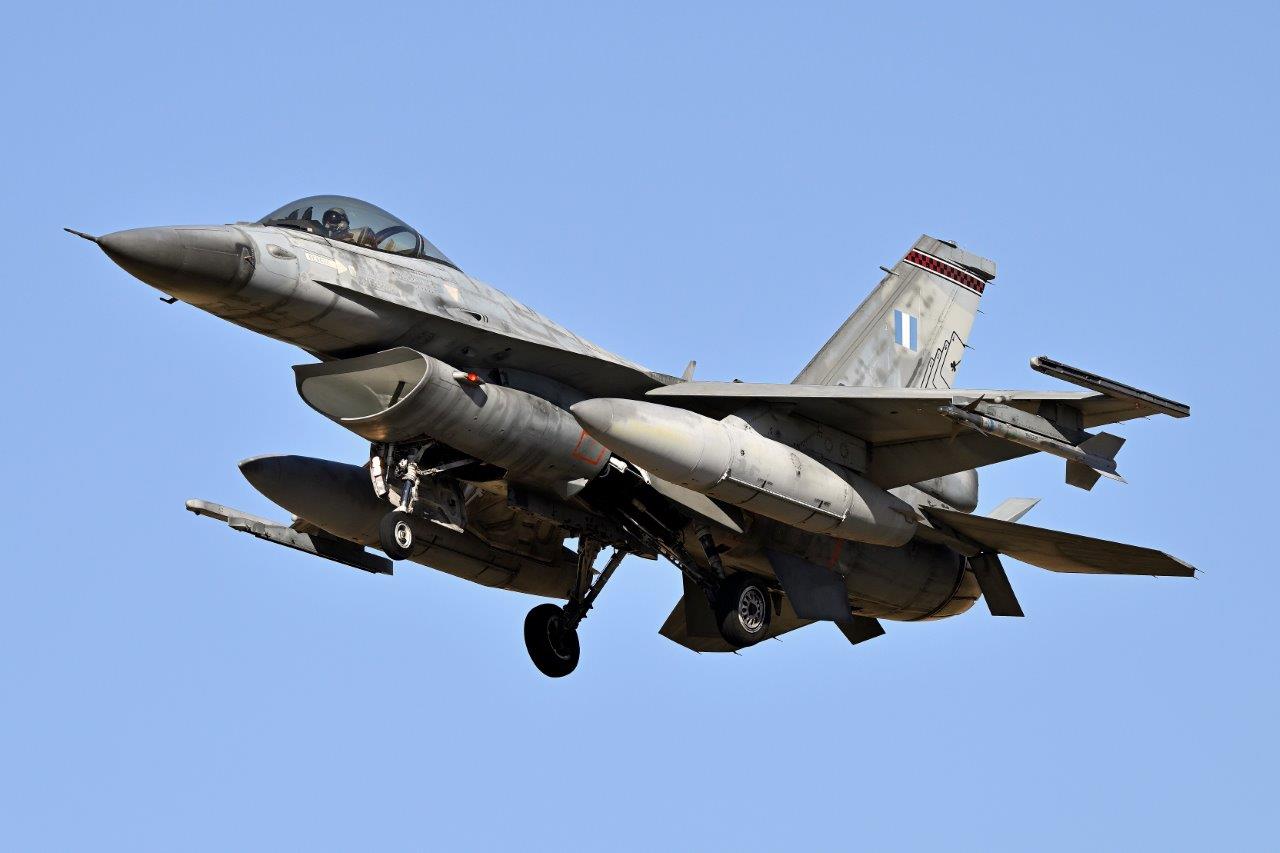
They flew only the main mission of the course, while the Spanish flew the F18s extensively on both missions.
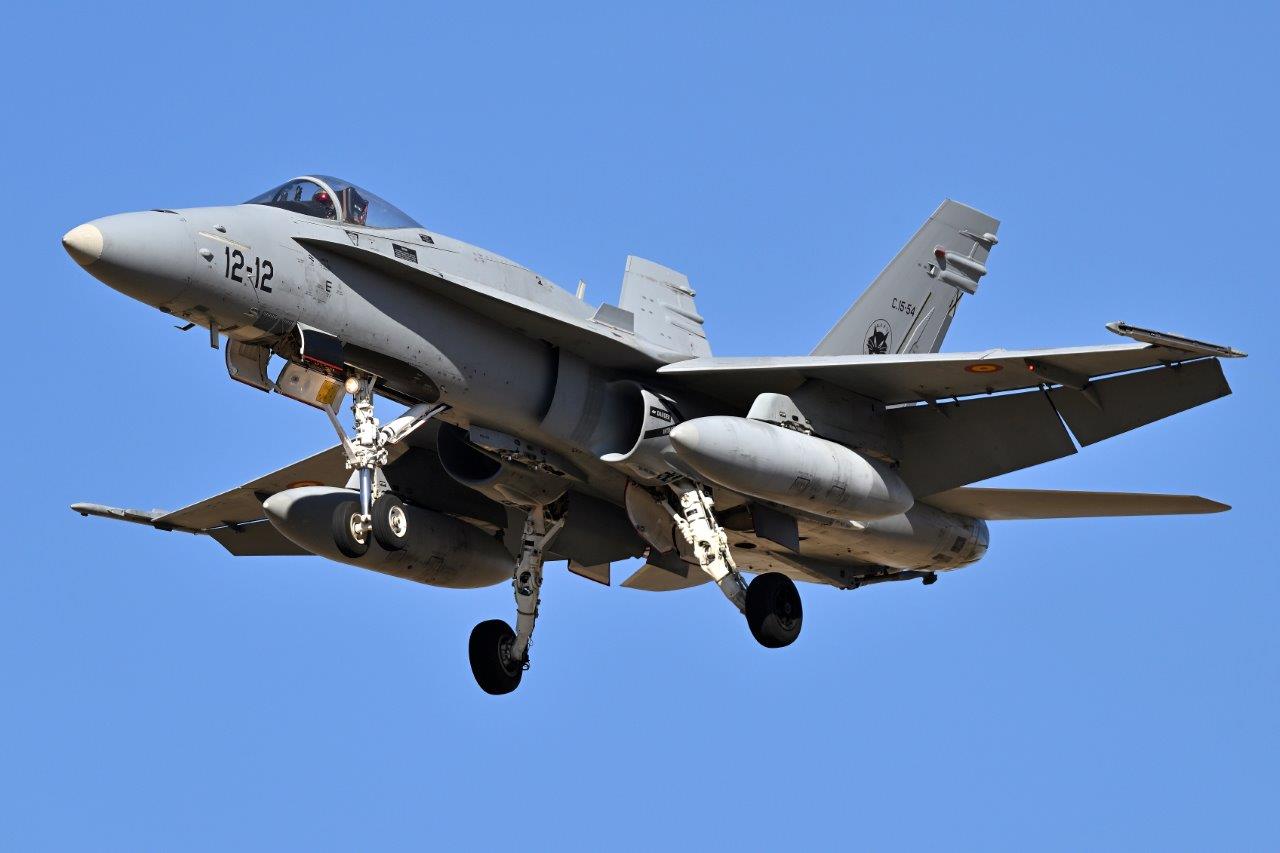
The key moment of the TLP is the return of the crews from the afternoon mission because the various flights are composed of different types of aircraft so you can see Harriers together
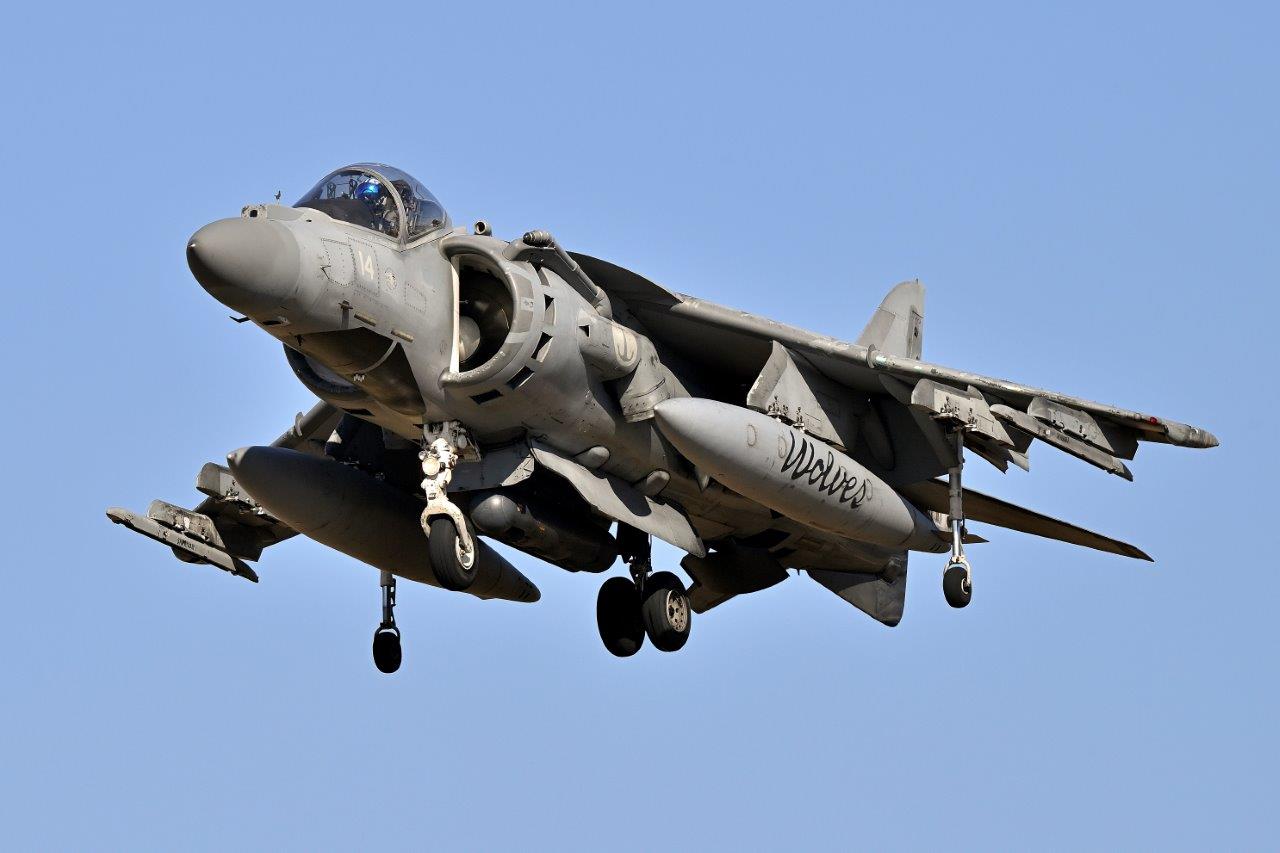
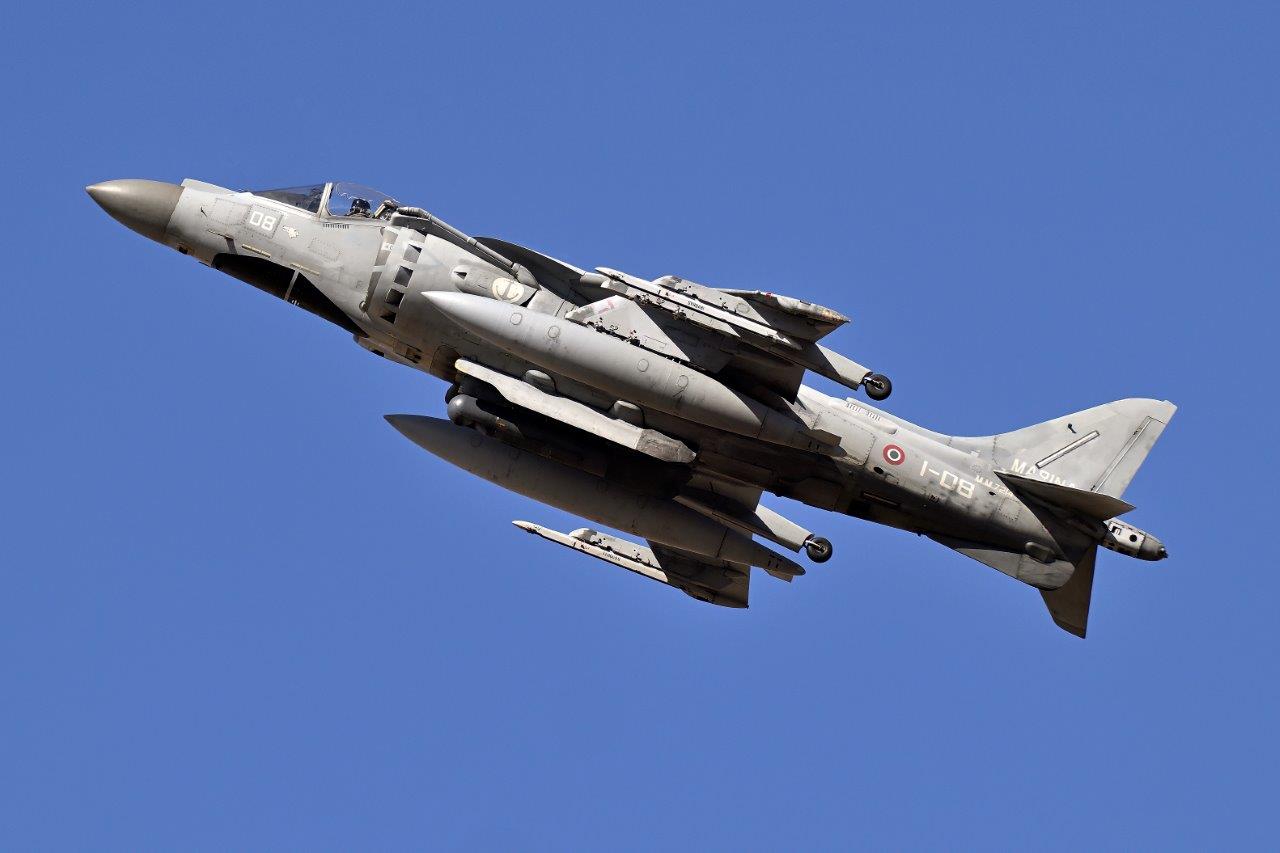
and F18
Rafale
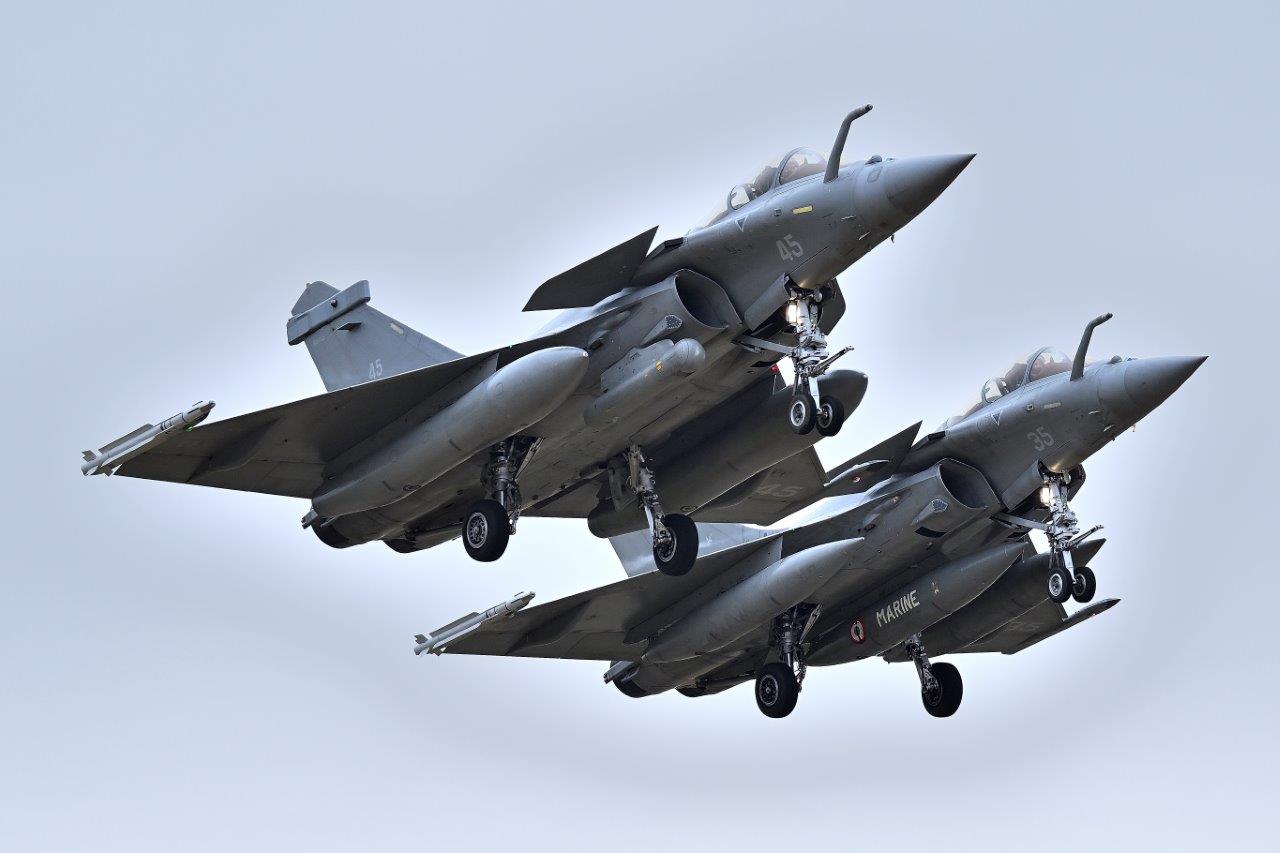
and Efa, F16
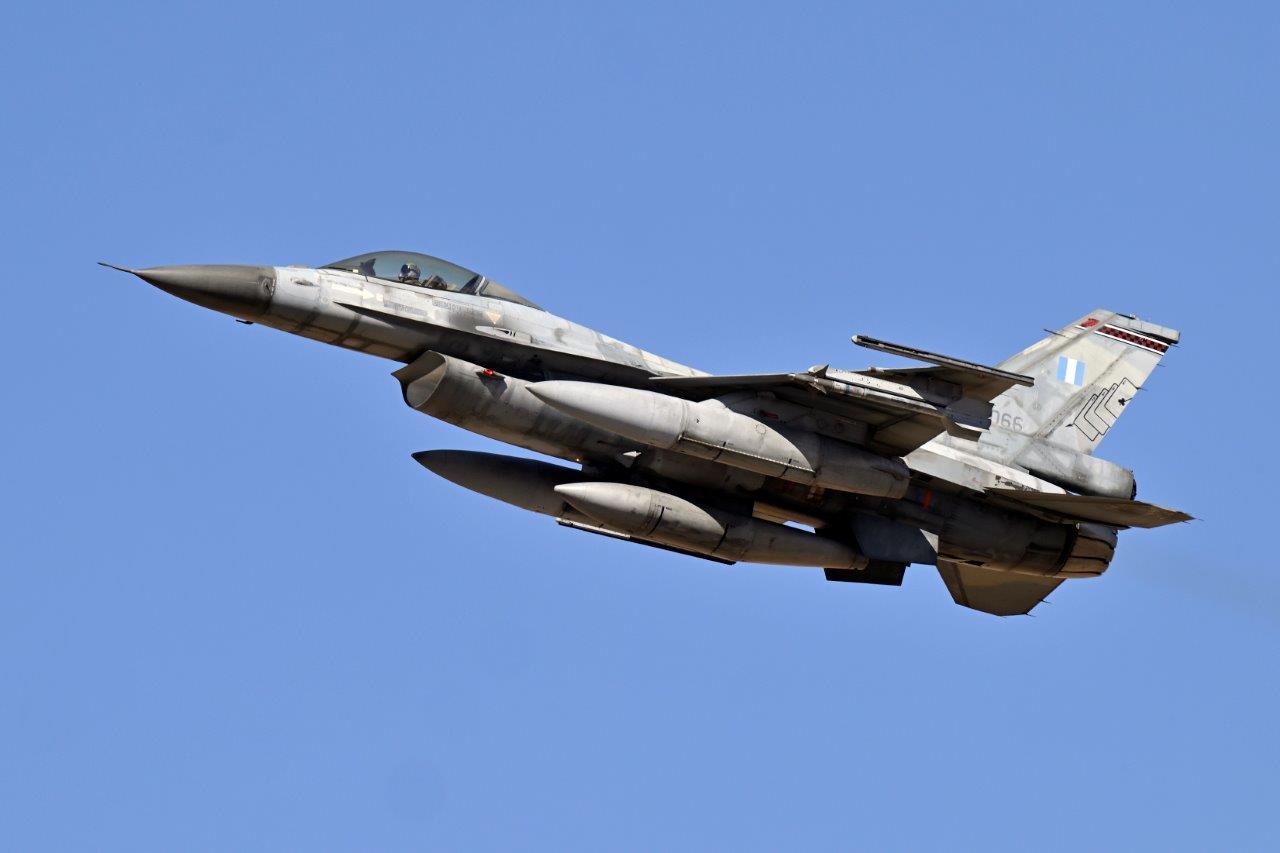
also F35
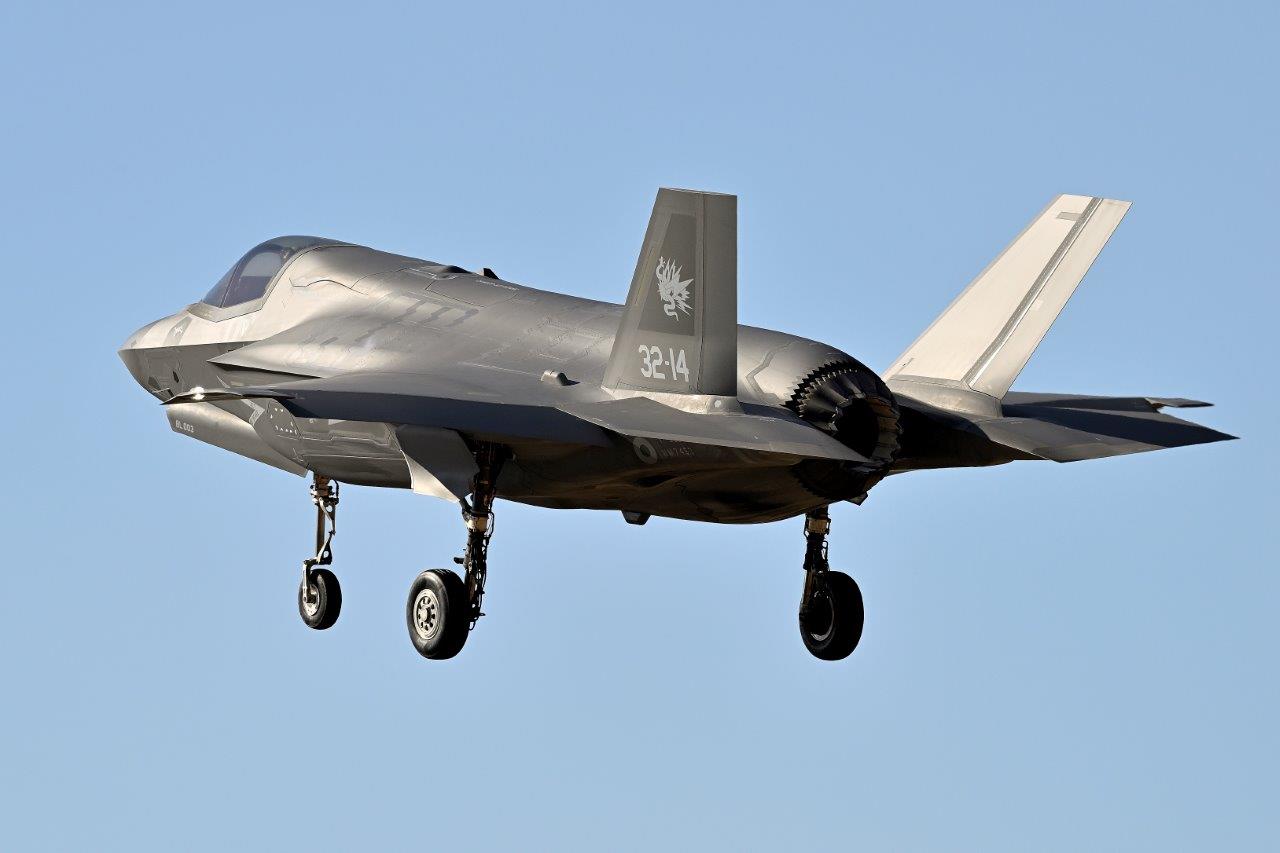
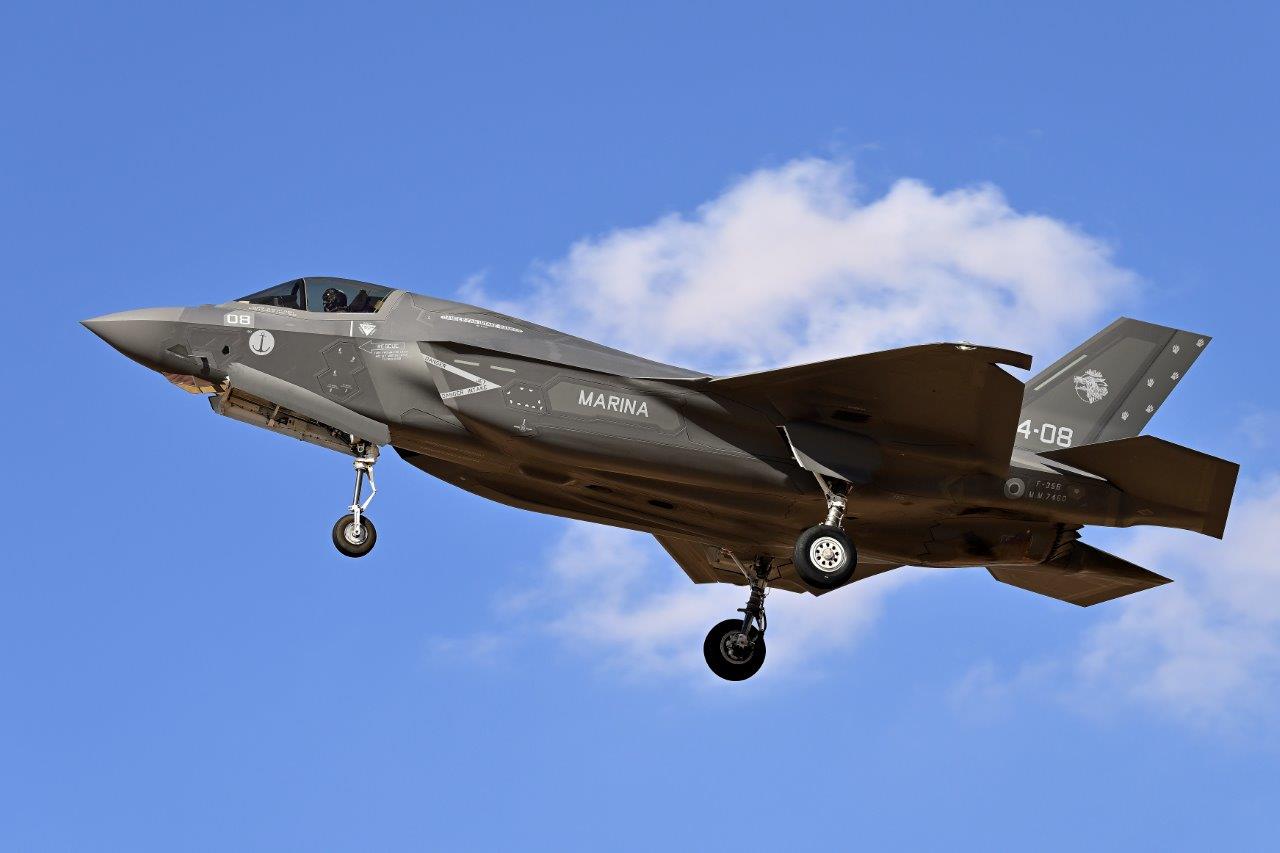
and observe the dimensions and the different shapes in comparison.
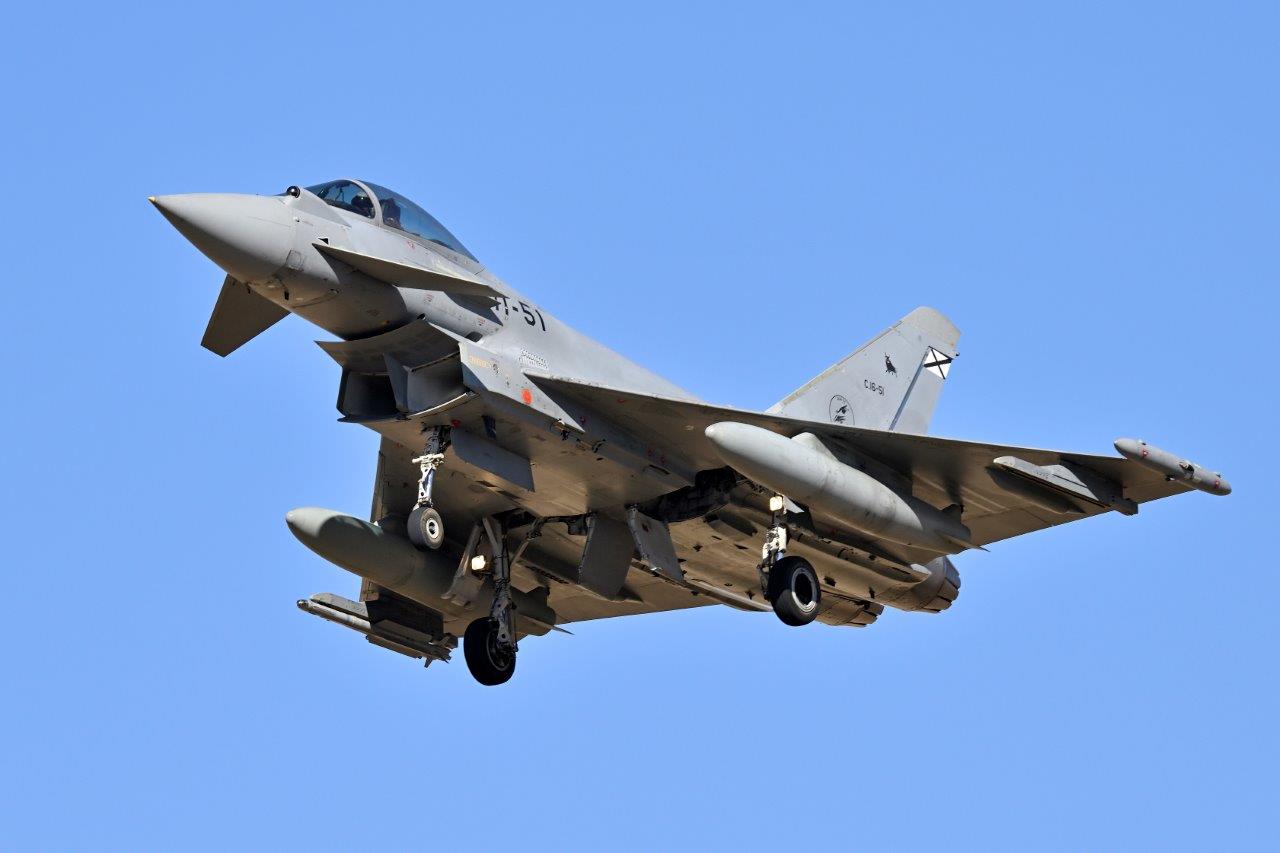
Late on Friday morning, when all the crews had already left to return to base, the five EFAs of Wing 14 who took part in the Tiger Meet arrived from Beja.

and performed a considerable number of low approaches with acrobatic flares on the runway axis.

E’ il cerchio che si chiude e salda insieme questi due eventi a cui abbiamo avuto la fortuna di assistere.
My dream has come true and we are satisfied with the result, but dreams must not end and now we look forward to the next event which is imminent and promises to be interesting, but we will talk about it soon.


 Pubblicato da magichefrecce


 8' Club Magiche Frecce Tricolori - 8 Frecce Tricolori Fan Club